Capitol Hill...

Poet’s Row roll call!

Sherman_Arms_01

Poet’s Row is a concentrated, Capitol Hill, historic district of apartment buildings built with elements of Art Deco, Streamline Modern & International Style, all on one short block. Most of the buildings were designed by an architect responsible for much of Denver’s modernist character, Charles Strong.

Charles Strong’s buildings are abundant throughout Denver. His most prominent local building is the 1957 Miesian-style glass and aluminum skyscraper, the Petroleum Club Building.

Sherman_Arms_02

We’ll start at 11th & Sherman, heading east in the opposite order of when these were built.

The International Style Sherman Arms Apartments building was built in 1950 and is just assumed to have been by Charles Strong, as the style of the building and use of Art Deco glass brick match the rest of the structures he built on this street…

Panama_Apts_01

…as you can see in this next building, the 1942 World War II-era Panama Apartments. It is also a mixture of Art Deco and International Style and is definitely designed by Charles Strong.

Panama_Apts_02

You can see the distinctive use of glass brick by Strong.

Eugene_Field_03

The Eugene Field Apartments were designed by Charles Strong in 1939. Another feature that many of these buildings share is the Art Deco stepped-brick spire.

Eugene_Field_02

Eugene Field is a famous St. Louis poet and essay writer. He also worked for the
Denver Tribune for two years!

Eugene_Field_01

Nathaniel_Hawthorne_01

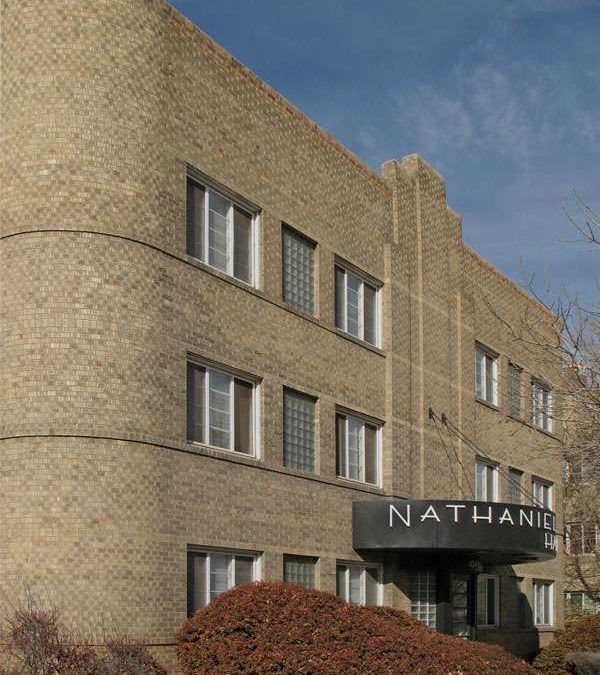
Next we reach the Nathaniel Hawthorne Apartments building, which resembles a film theater with it’s vertical Art Deco movie-marquee entranceway. Named after the famous author of The Scarlet Letter, the building was designed 1938 by Charles Strong.

Nathaniel_Hawthorne_02

Strong gave this building Streamline Modern-style radial corners.

Nathaniel_Hawthorne_03

Mark_Twain_02

Strong had used Moderne radial corners and a similar use of Art Deco glass brick the year before in the design of the Mark Twain Apartments in 1937. Here again is the stepped-brick spire.

Mark_Twain_01

Twain, arguably America’s most famous writer, also had a streamline modern Burlington Zephyr route named after him that traveled from Burlington, Iowa down to St. Louis. Here is a borrowed photo of that Zephyr:

Mark_Twain_03

The entranceway is notable for it’s high glaze ceramic brick.

Mark_Twain_04

Robert_Frost_01

The Robert Frost Apartments were not by Charles Strong. They were designed by Andrew B. Wilson in a 1929 version of Spanish-Colonial style and the building was original called the Casa Bonita! The name was changed to Robert Frost in the ’30s.

Emily_Dickinson

The 1956 Emily Dickinson Apartments building was originally called The Constellation and was designed in a hip, yet spare ’50s version of the International Style, making this the most contemporary member of Poet’s Row.

Louisa_May_Alcott_01

And as we reach the corner of 10th and Sherman we come upon the twin of the Robert Frost, the Louisa May Alcott apartments. It was built 2 years later in 1931 and is almost exactly the same Spanish-Colonial design by Andrew B. Wilson. It was originally called Casa La Vista.

Robert_Browning_01

Crossing the street we reach the Robert Browning Apartments, named after the Victorian-era English poet. It was designed 1937 in the Art Deco style by Charles Strong.

Robert_Browning_02

The Art Deco buildings built on this east side of the street by Charles Strong have a different look than the ones on the west and do not make use of glass brick.

Thomas_Caryll_01

The Thomas Caryll Apartments were named after a Scottish satirist. They were designed in 1936 by Charles Strong.

James_Russell_Lowell_02

And finally the James Russell Lowell Apartments, named after a famous Fireside Poet and anti-slavery activist. They were built 1936 by the great modernist and poetry-lover Charles Strong.

James_Russell_Lowell_01

(Some facts gleaned from this page: Sherman Street Historic District)

October 10th, 2011 / 1 Comment » / by Tom Lundin


Dorset House

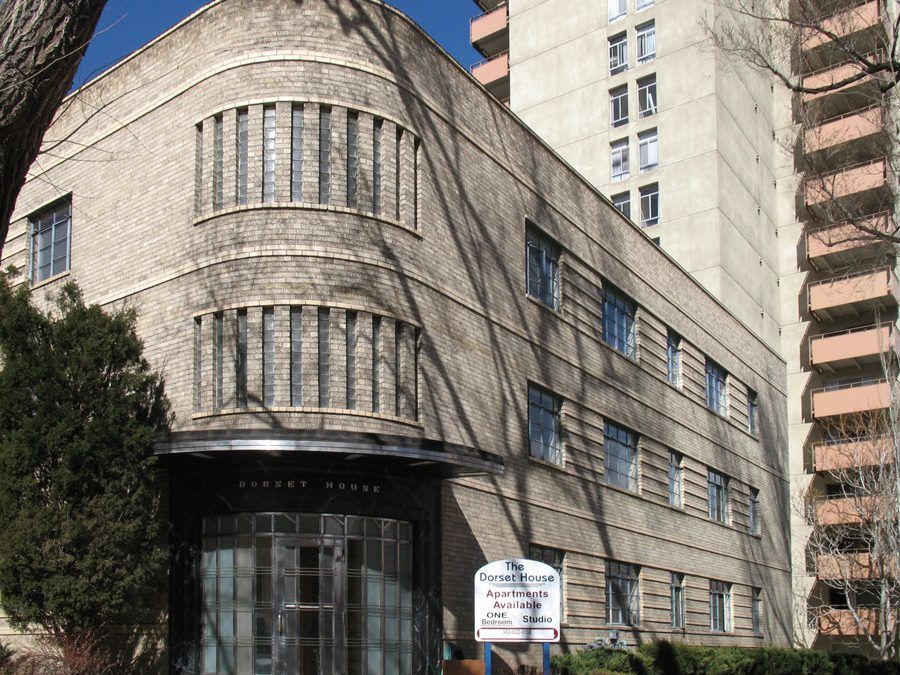
DorsetHouse_1938_IMG_2440

The Streamline Modern Dorset House on Capitol Hill, built 1938.

August 23rd, 2010 / No Comments » / by Tom Lundin


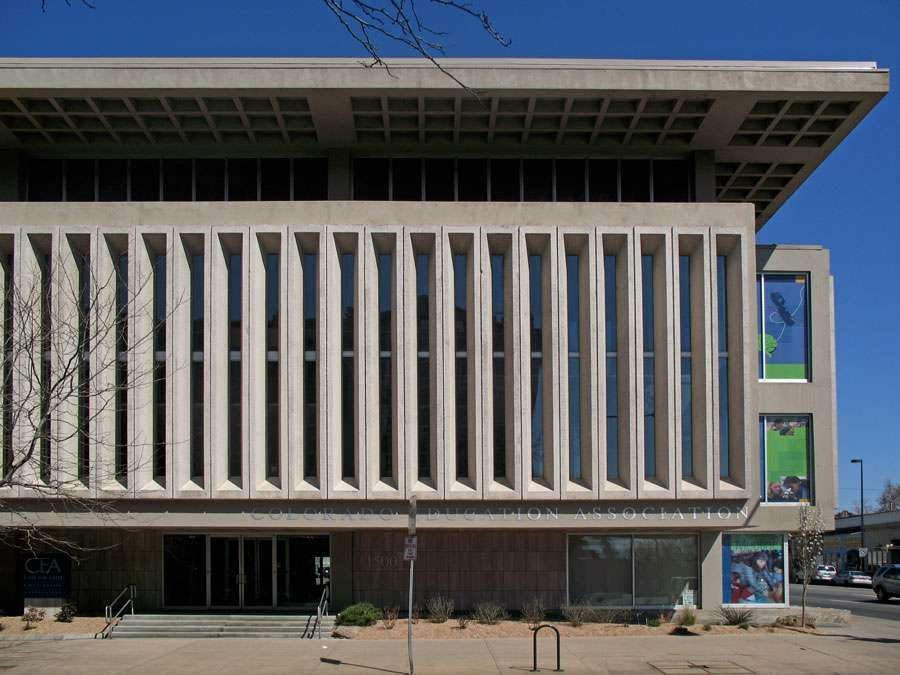
Colorado Education Assocation building

Muchow_IMG_2417

The Formalist Colorado Education Assocation building on Colfax, across the street
from the State Capitol Building, was originally Silver State Savings and Loan.

Designed 1963 by William Muchow, the cantilevered boxes that extend out on all sides
contain potted trees!

August 19th, 2010 / No Comments » / by Tom Lundin


Nathaniel Hawthorne

Strong,Charles-PoetsRow_IMG_2305

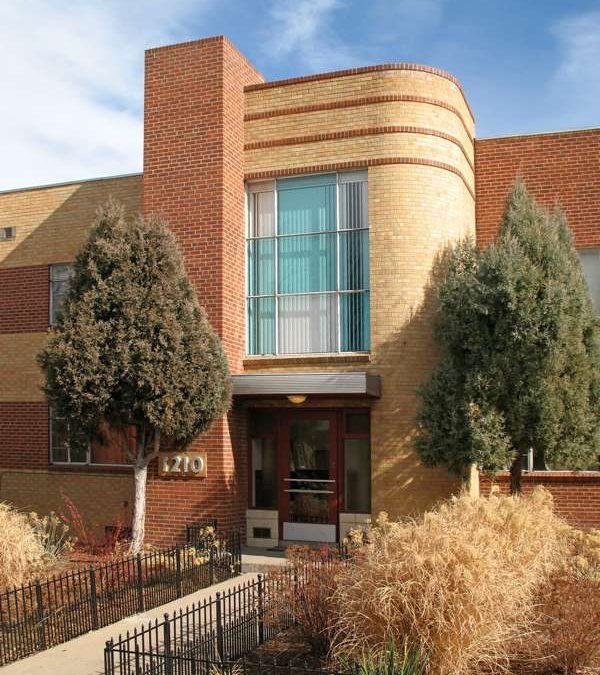
The Art Deco/Streamline Modern theater-marquee style of the
Nathaniel Hawthorne building on Denver’s Poet’s Row,
designed 1938 by Charles Strong.

August 3rd, 2010 / No Comments » / by Tom Lundin


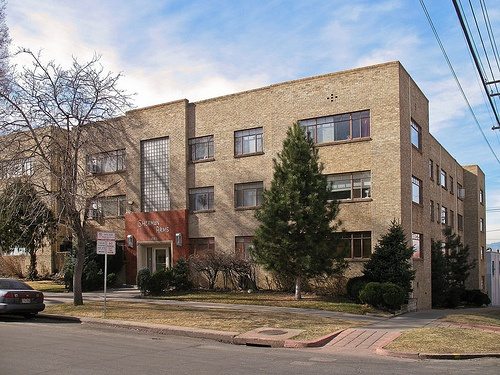
Parkaire

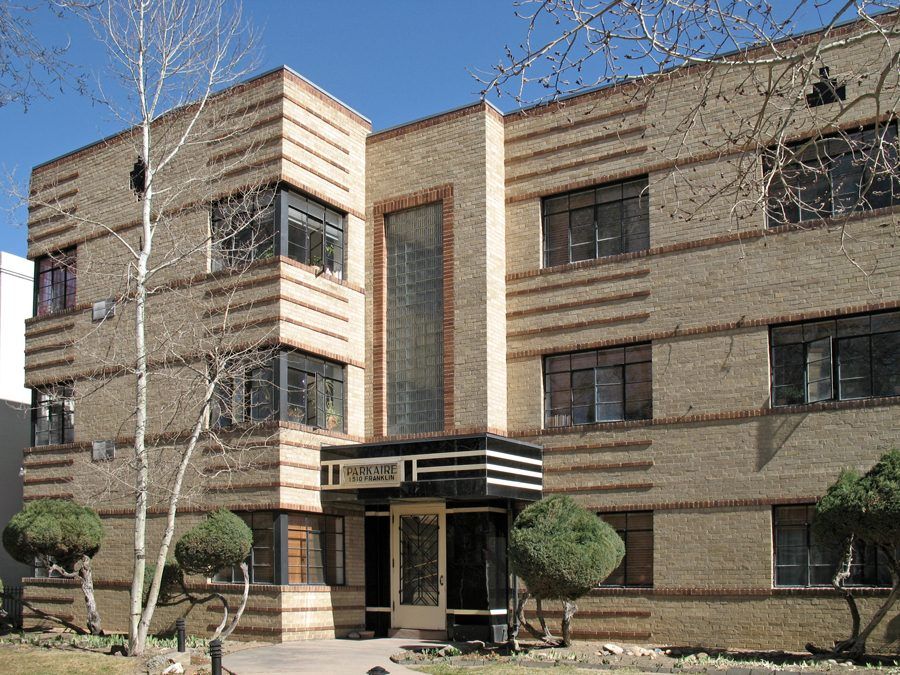
CapitolHill_IMG_2478z

The Parkaire Apartments located on Capitol Hill, Art Deco design from the late-’30s, I assume

May 12th, 2010 / No Comments » / by Tom Lundin


The Harwood

Denver_ArtDeco_IMG_2420

The asymetrical Art Deco entranceway to the The Harwood, on the east side of Capitol Hill, which probably dates from the late-1930s.

February 24th, 2010 / No Comments » / by Tom Lundin


Our Savior Parish Center

Denver_CapitolHill_Haertling_IMG_5627

Usonian addition to Our Savior Parish Center on Capitol Hill.

Designed by Charles Haertling in 1961.

February 12th, 2010 / No Comments » / by Tom Lundin


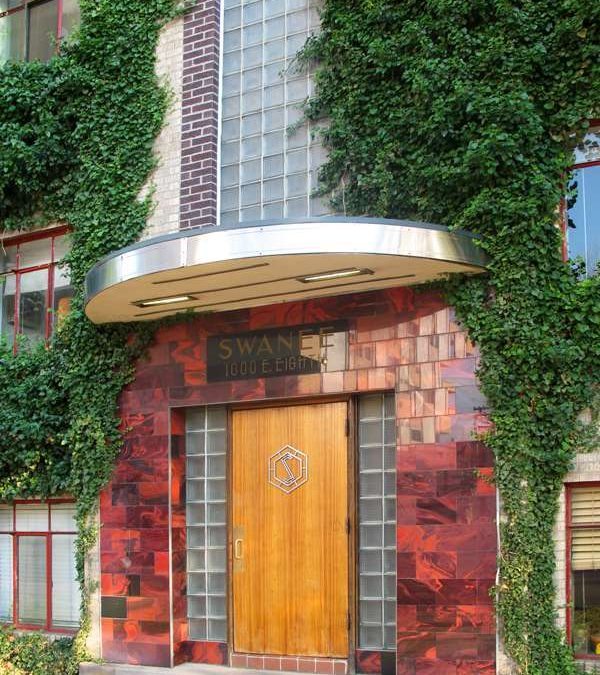
Swanee Art Deco entranceway

Denver_CapitolHill_IMG_5596

Art Deco entranceway for The Swanee building on Eighth avenue.

I assume this was designed in the late-1930s

December 7th, 2009 / No Comments » / by Tom Lundin


Mark Twain

Denver_ArtDeco_IMG_2310z

The Art Deco entranceway to the Mark Twain building, designed 1938 by Charles Strong

Located in Poet’s Row on Sherman St.

October 6th, 2009 / No Comments » / by Tom Lundin


Prairie Style

PrarieStyle1

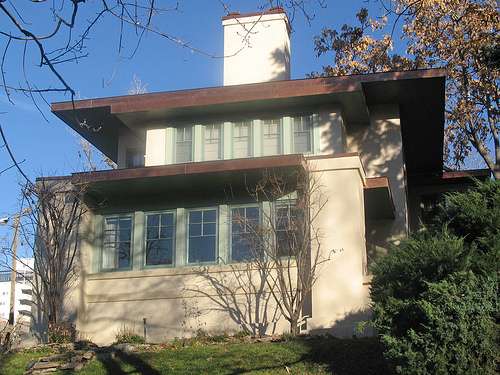
This Prarie Style house on Clarkson was built in 1923.

PrarieStyle2

Prairie School is a style of architecture made popular by Frank Lloyd Wright in the late 1800’s/early 1900’s.

August 3rd, 2009 / No Comments » / by Tom Lundin