Churches...
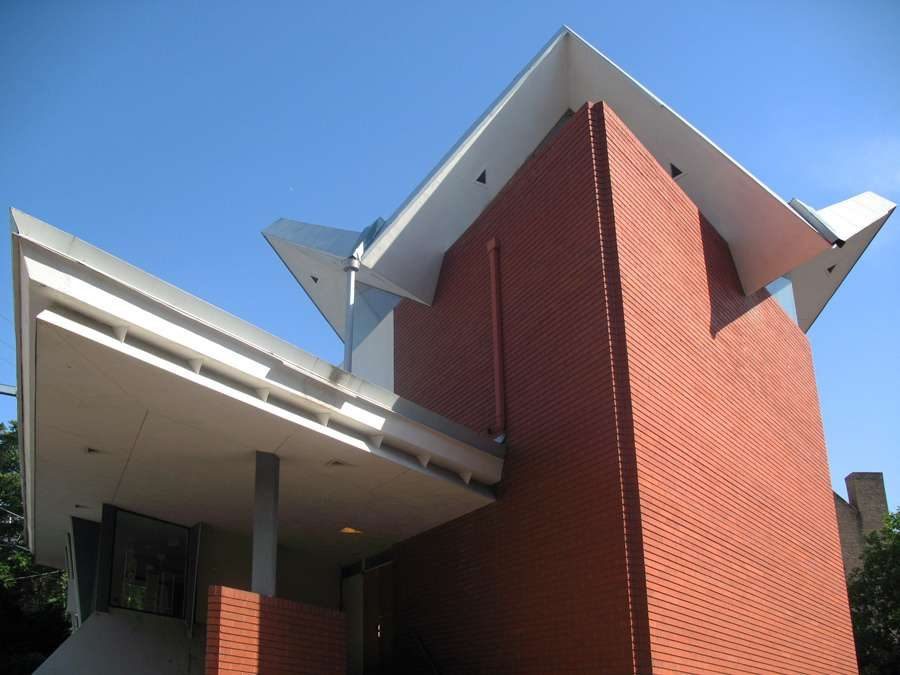
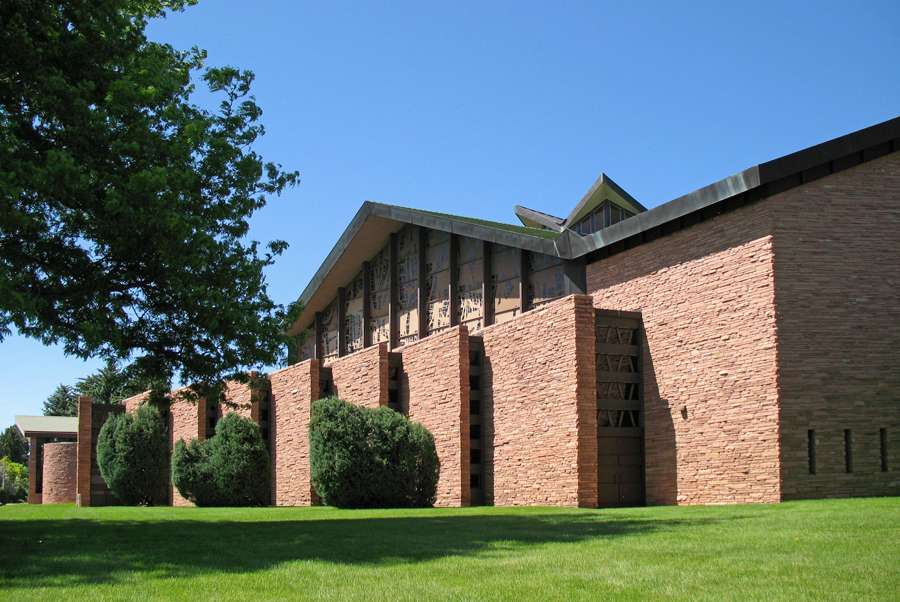
Methodist Student Center
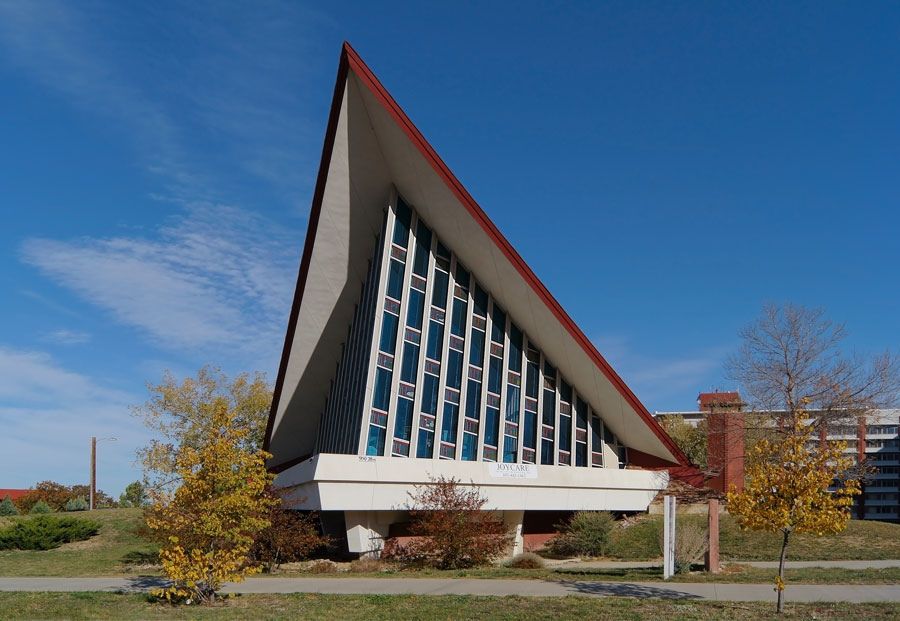
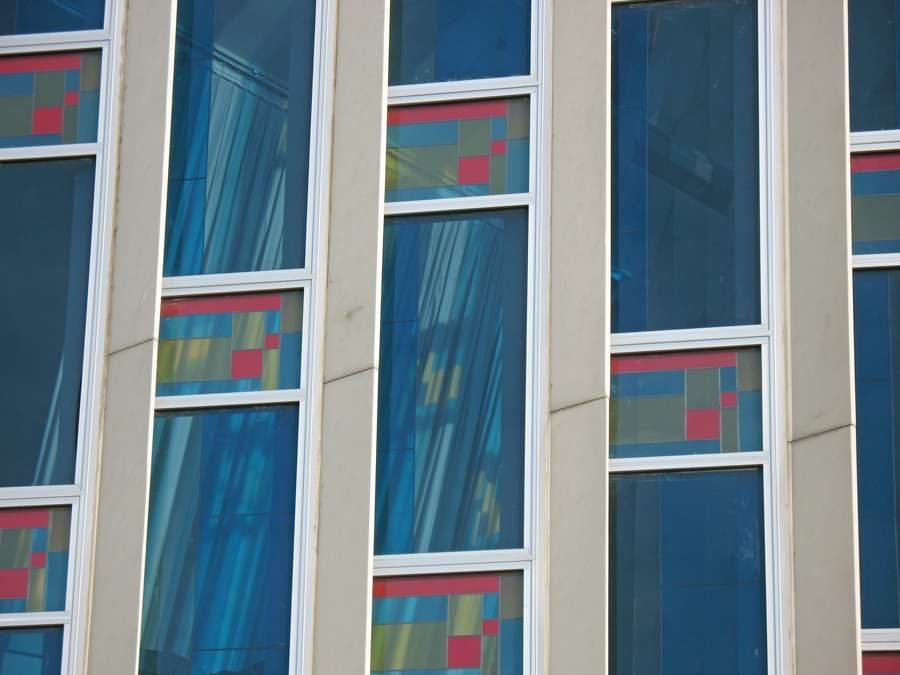
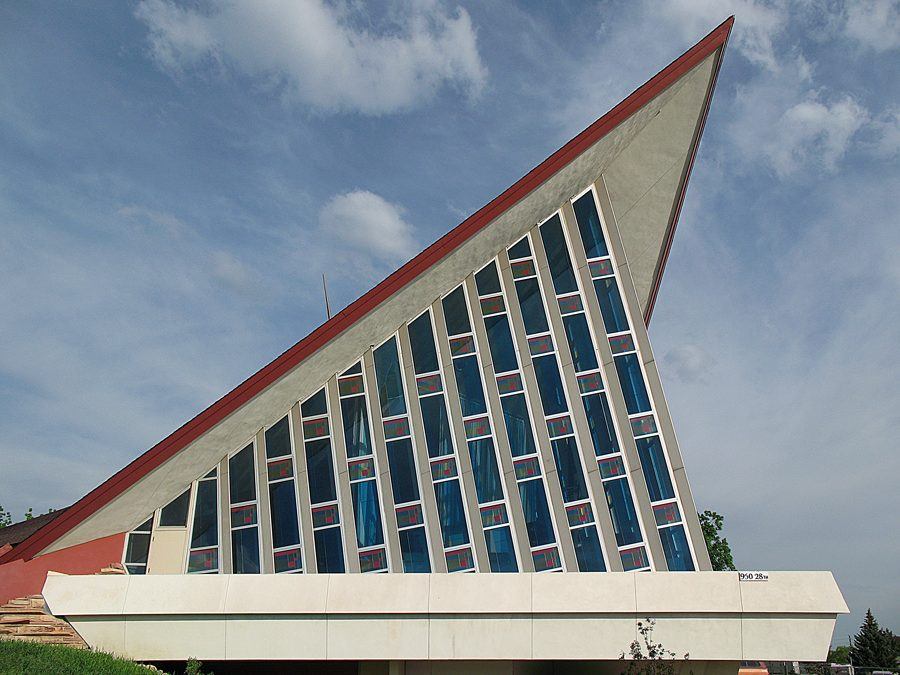
A side shot showing the incredible roofline of the expressionist Methodist Student Center in Boulder (now Essence of Life Apostolic Church), designed 1957 by Hobart Wagener (click to enlarge). This is one of the first modernist churches in Boulder!
To learn more about Boulder’s modern architectural history, visit the impeccable website of
Jim Broadus, Boulder Modern House.
December 14th, 2012 / 1 Comment » / by Tom Lundin
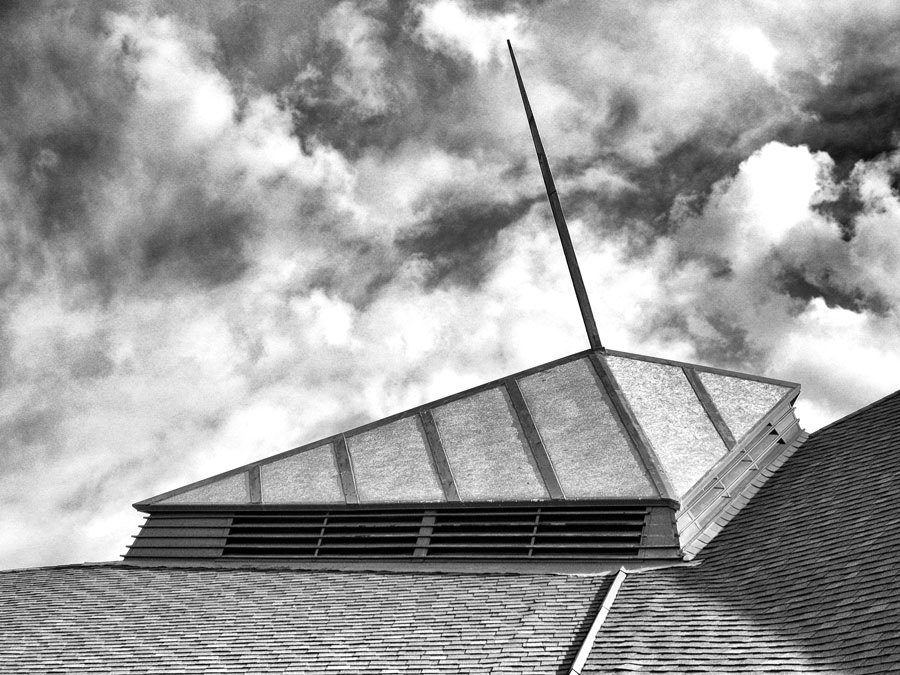
Vent
A rooftop vent from the Usonian-style First Christian Church in Boulder, designed
1960 by Thomas Nixon and Lincoln Jones.
July 8th, 2012 / No Comments » / by Tom Lundin
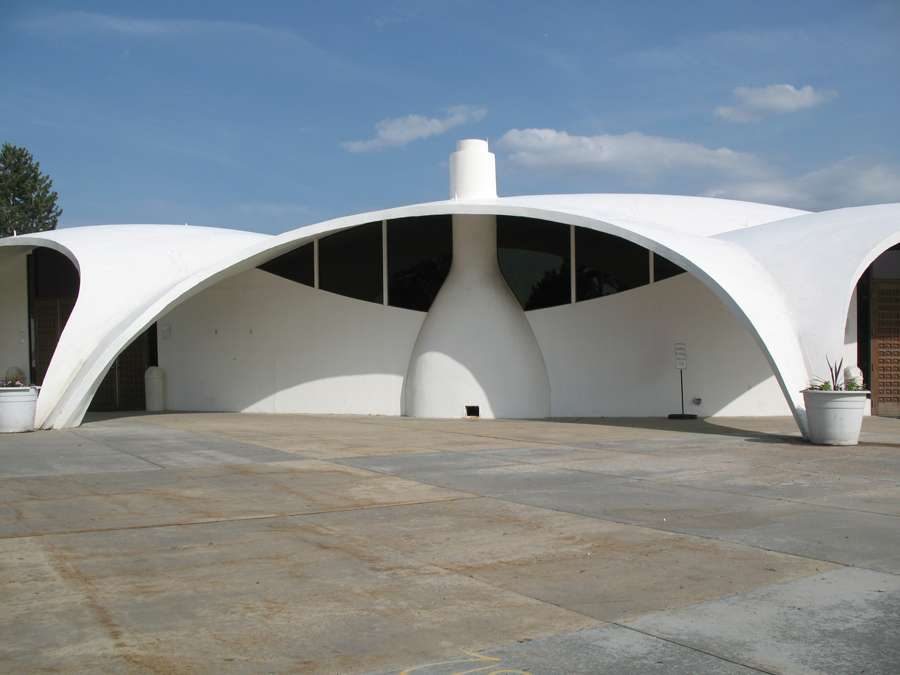
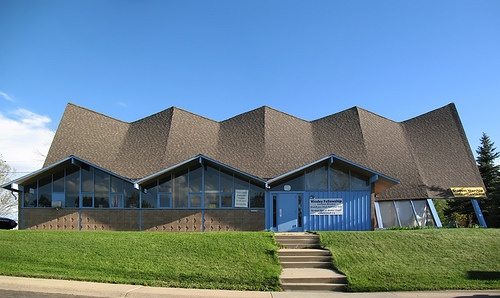
St. Stephens Lutheran Church
St. Stephens Lutheran Church in Nrothglenn, designed by Boulder architect
Charles Haertling in 1964.
The unique roof of this church makes use of the mathematical shape, the hyperbolic
parabaloid. (Actually as Joel Haertling corrects in the comments, more of a
convex dome.)
March 23rd, 2012 / 4 Comments » / by Tom Lundin
Boulder icon
I am happy to note that this iconic Usonian building, the First Christian Church, located
where the 36 Hwy becomes 28th St at the entranceway to Boulder, is still standing despite
having been for sale for years now. There was concern that it would be torn down and
replaced with student housing.
Designed 1960 by architects Thomas Nixon & Lincoln Jones.
With it’s prominent Boulder location, it is nice way for residents to regularly view a historic
example of the direct influence of Frank Lloyd Wright.
October 27th, 2011 / 1 Comment » / by Tom Lundin
The Modern Architecture of Sleeper

Charles Deaton’s Sculptered House of Genesee
Woody Allen chose Colorado in 1973 to film his famous science-fiction comedy, Sleeper,
because of the abundance of futuristic modern architecture along the front range to
feature as backdrops in his film. Here is a rundown of locations in order of appearance
in the movie.
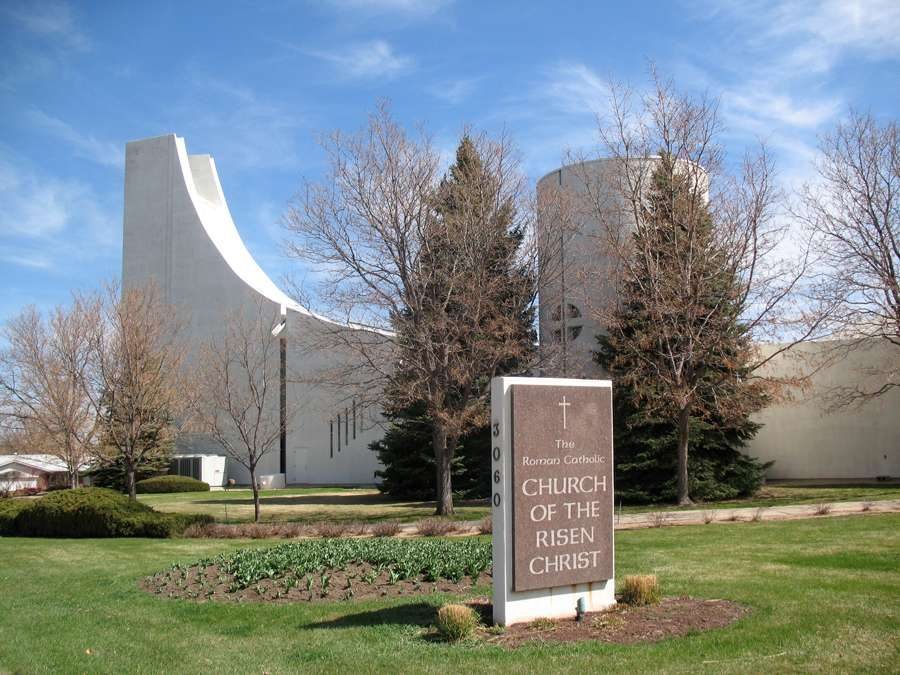
This house at the beginning of the film is actually the back of the Church of the Risen Christ, designed 1969 by James Sudler.
Next, this shot is the Boettcher Memorial Conservatory designed 1966 by Victor
Hornbein and Ed White, Jr. at the Denver Botanic Gardens. The movie has a little
model futuristic car riding on a track in front.
Some locations I could not identify such as this interesting interior above. I am hoping
readers can write in and enlighten us.
These underground parking shots are another unknown. One reader suggests these are
from Cinderella City, but I can’t find shots of this to verify. Anyone?
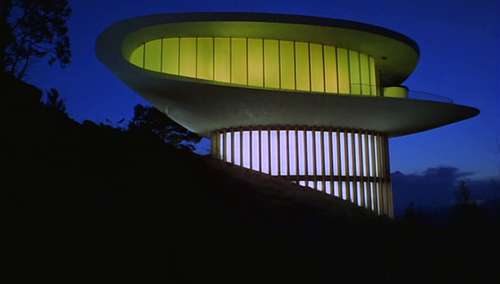
The amazing Sculptured House of Genesee, built by Charles Deaton in 1966 and not
actually lived in until John Huggins completed it after purchasing the home in 1999.
After watching the film, it is clear that the circular elevator is not used as the famous,
ahem, Orgasmatron in the film as rumored, it is really just a cheap small prop.
This odd, yet beautiful building is the Varner House, designed 1969 by James Ream.
Another interesting concrete shell structure, I am hoping someone can write in and tell
me where it is.
Next we are off to Boulder to see Charles Haertling’s impressive Brenton House,
a 1969 design that resembles barnacles or possibly mushrooms.
More shot’s of Deaton’s Sculptured House. Charles Deaton also designed this similar
bank on South Broadway.
No visit to Boulder is complete without a visit to the I. M. Pei masterpiece, the National
Center for Atmospheric Research, N.C.A.R. (more shots of this coming up)
Of the locations in the film that I could not identify, this is the one I would really like to
track down. Anyone? I am guessing it is a church. Note: Reader Eric identified this as
Culver City High School in California. It is still there!
This is the Mile Hi Church in Lakewood with a McDonalds sign over the eye. It is now
accompanied by two other larger structures, the newest one is an enormous concrete shell.
N.C.A.R. in Boulder, one of the most beautifully sited structures ever. Of all the I. M. Pei
projects in Colorado, this is the one that has remained the most-intact. Planning started
in 1961, the building was completed in 1967.
And, finally, the late, great Currigan Exhibition Hall, designed by Jim Ream in 1969
for William Muchow Associates. It was built with the world’s largest use of the space
frame. It was torn down in 2002 to make room for the expansion of the Denver
Convention Center.
(Brutalist structures are the most under-appreciated, most misunderstood and most
endangered modern architecture.)
June 24th, 2011 / 9 Comments » / by Tom Lundin
Johnson’s Corner
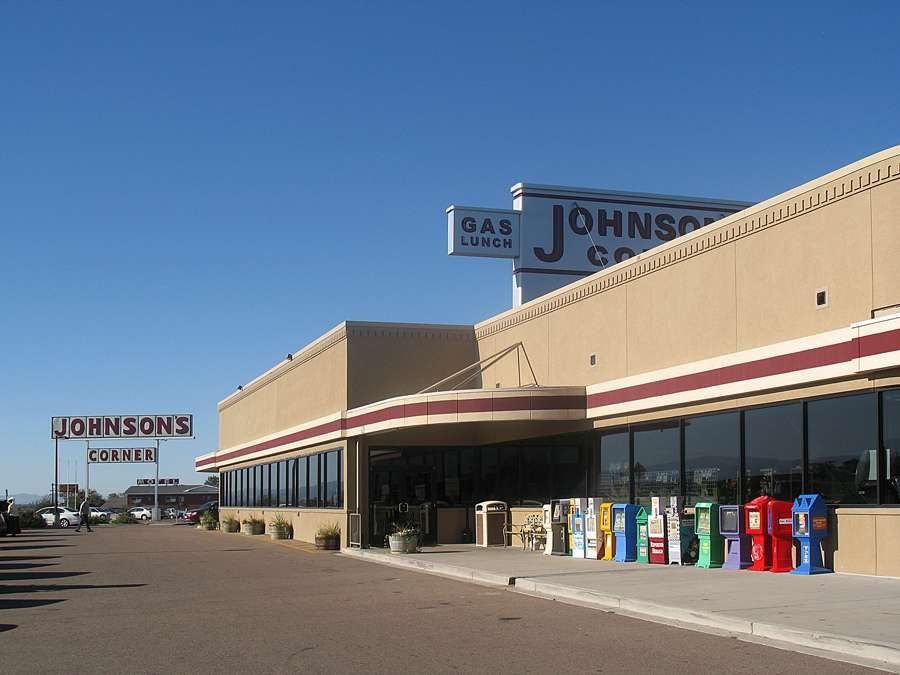
World-famous Johnson’s Corner truckstop on I-25, originally built 1952 long before I-25,
when the route alongside was still Highway 87. (Click on the photo to enlarge).
While most well-known for their cinnamon rolls, my favorite feature is out back, the little
Johnson’s Corner Chapel:
Johnson’s Corner can also be seen in Bill Murray’s 1995 film Larger Than Life.
September 15th, 2010 / No Comments » / by Tom Lundin
Usonian church
St. Joseph’s Episcopal Church on Green Mountain in Lakewood.
It is an octagonal church designed in the Usonian-style in 1964.
September 7th, 2010 / No Comments » / by Tom Lundin
First Christian Church
As of 2010, this iconic example of Boulder’s original modernist architecture is still standing!
The Usonian First Christian Church on 28th in Boulder was designed 1960 by Thomas
Nixon & Lincoln Jones.
August 31st, 2010 / 3 Comments » / by Tom Lundin
Park Hill Church
Entranceway to Park Hill Church, designed in the early 1950s by Eugene Sternberg
July 6th, 2010 / 1 Comment » / by Tom Lundin