Homes...
Mountain mod
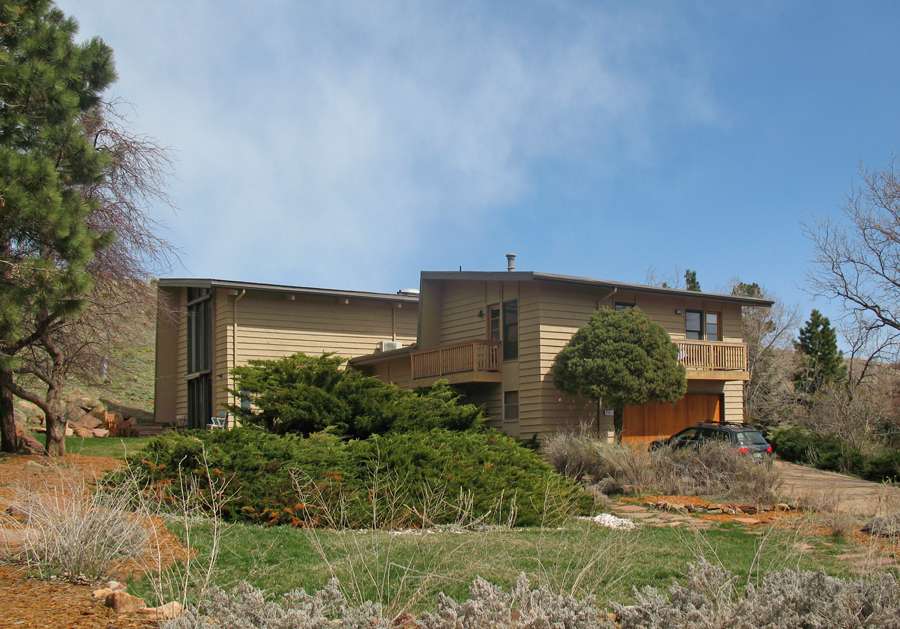
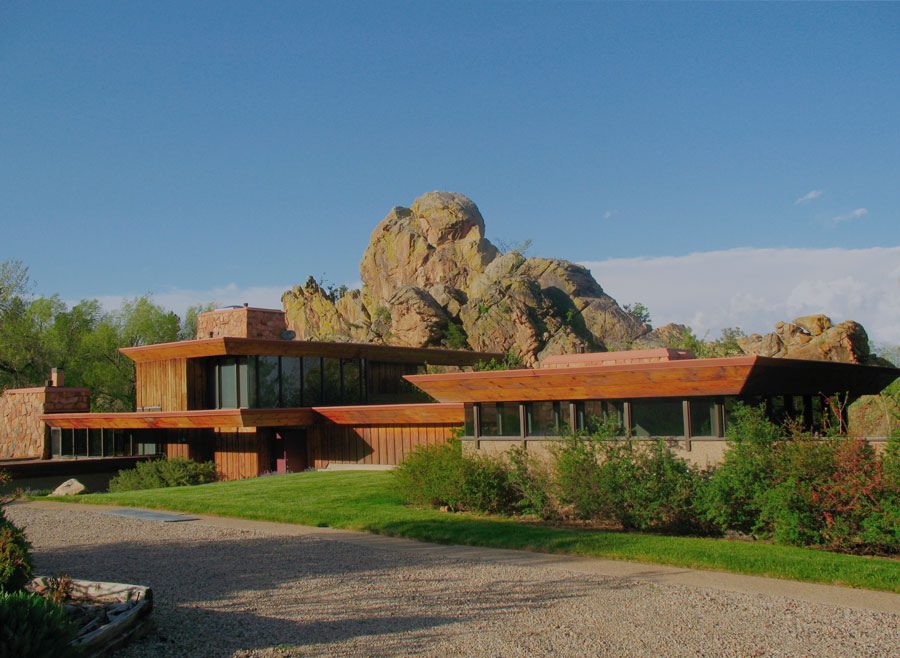
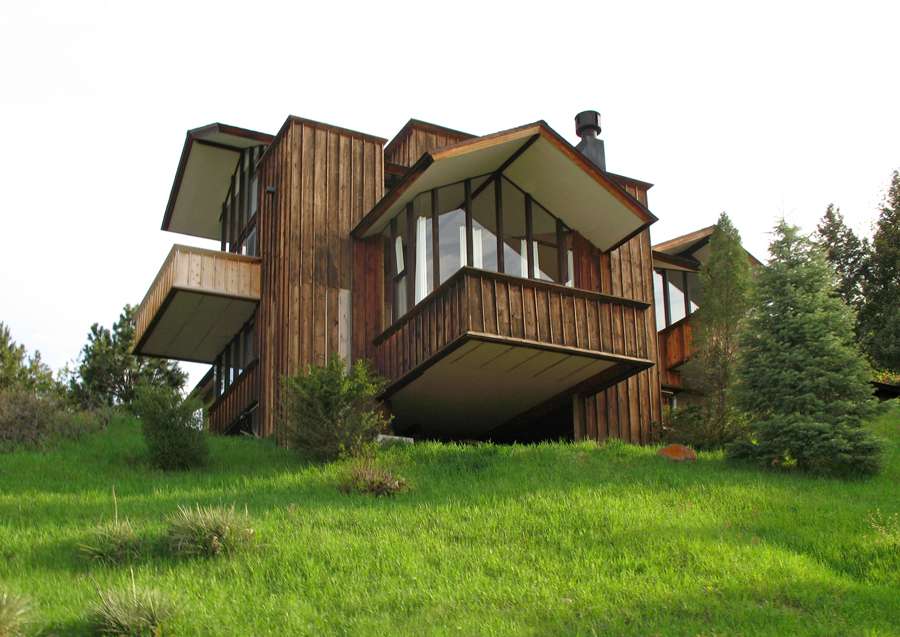
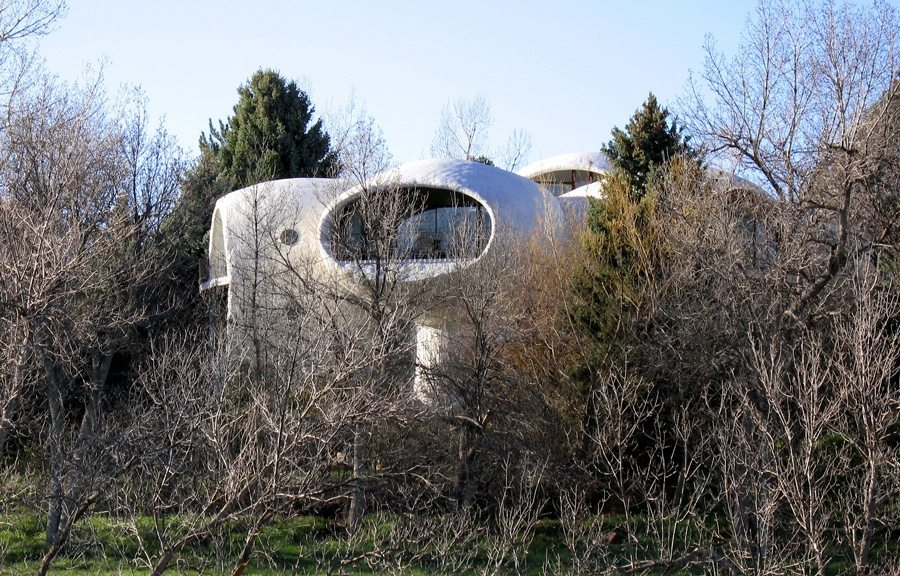
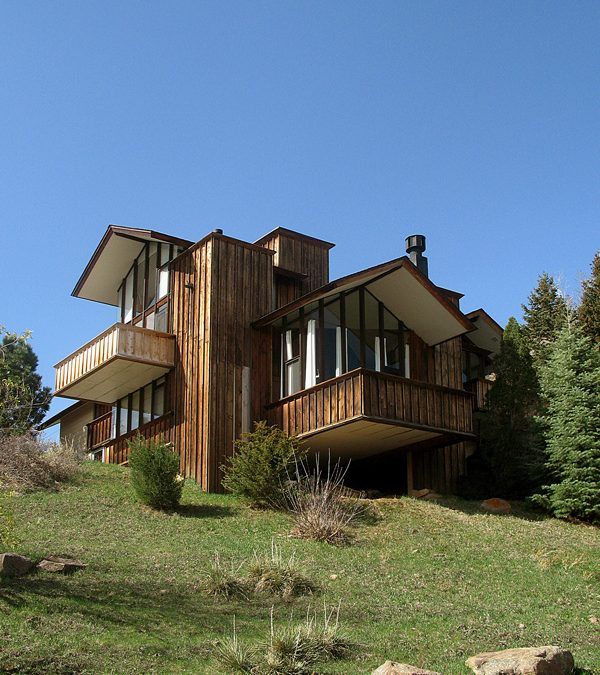
The Fleck House deep in the woods on Lookout Mountain above Golden. Built in 1981,
it is one of the last houses built by Boulder master architect, Charles Haertling.
September 9th, 2012 / No Comments » / by Tom Lundin
House on the Mesa
As everyone should know by now, there are *no* official Frank Lloyd Wright buildings in Colorado. When you inevitably see his name dropped by ill-informed Colorado real estate agents in their ads, feel confident that they are quite mistaken.
Wright did design two structures for Colorado, his unbuilt version of The Horseshoe Inn in Estes Park in 1908 and his 1932 entry into the the International Exhibition of Modern Architecture at the Museum of Modern Art in NY, the unbuilt House on the Mesa.
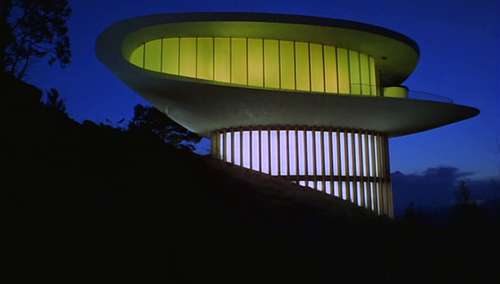
The House On the Mesa was a four-car luxury home made of steel, glass and concrete with a panoramic view of the Rocky Mountains. A long building, it extended 360 feet on a flat site of several acres. A concrete blockshell wall faced the major highway that ran past the property. The house featured a swimming pool covered with a cantilevered roof and an open lake with surrounding woods.
It is not likely there was ever a true location identified for this building in Denver or even in Golden where two large mesas separate the town from the rest of wider Denver. No location in the area fits all of Wright’s plans, orientations and descriptions.
The House on the Mesa was designed for a moderately wealthy American family of considerable culture — master, mistress and four children, cook and two maids, chauffeur and gardener.
Their architect intended to help them make something of machine-age luxury that would compare favorably in character and integrity with the luxury of the Greeks or Goths, within the limits of an expenditure of some $125,000. -Frank Lloyd Wright 1932
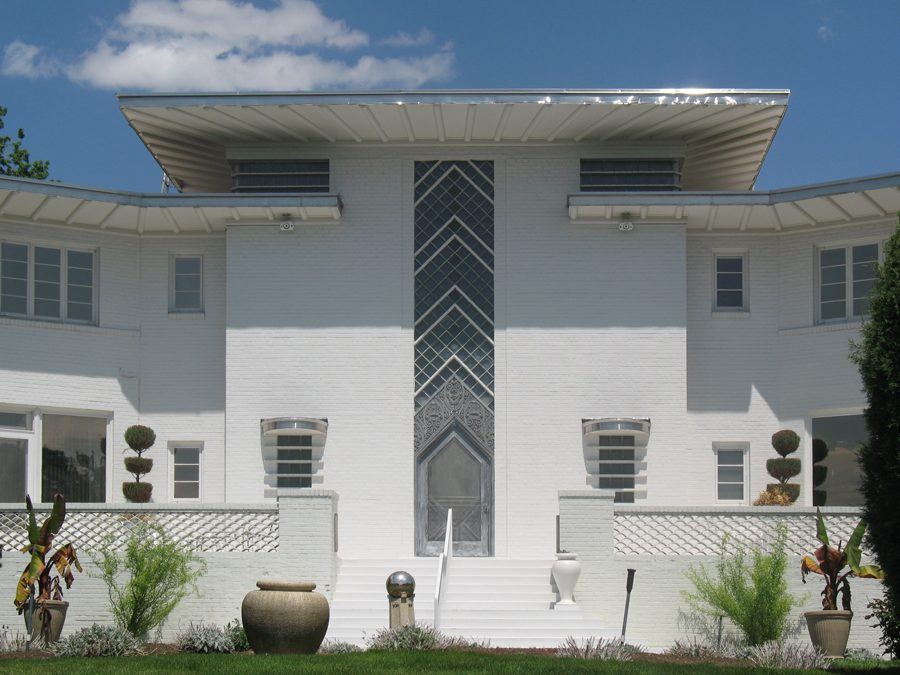
Wright’s inspiration of the wealthy American family of considerable culture comes from a visit in 1930 to give a speech at the Denver Art Musuem. He was invited to stay at the home of George Cranmer, who lived in a Italian Renaissance Revival villa designed by J.B. Benedict in 1917. The house still sits today in the Hilltop area on the edge of Cranmer Park with the mountains viewable to the west.
Robery Sweeney’s book Wright in Hollywood states “Wright explained later that he had used the Cranmers’ family and situation merely as an ideal American family … as an example to the country, when designing House on the Mesa; their set up seemed worth interpreting. He added that he had no idea whether they would at all like the interpretation.”
In 1935 George Cranmer became manager of Denver’s parks and recreation system and oversaw the construction of Red Rocks Ampitheater, the Valley Highway (now the Denver portion of I-25), the Boulder Turnpike, Winter Park and the purchase of the land for Stapleton Airport.
(Information and photos borrowed from SaveWright.org’s WrightChat using information from Robert Sweeney’s book Wright in Hollywood, [©1994 Architectural History Foundation/MIT Press] and Bruce Brooks Pfeiffer’s third volume of collected writings [Rizzoli, 1993, pp 126-30]).

Hey Mod Livin’ fans!
Time to show some support and vote for Mod Livin’ on Mission: Small Business.
- 1. Navigate to https://www.missionsmallbusiness.com/
- 2. Click the blue button [LOGIN & SUPPORT]
- 3. Log In using your Facebook Account & allow permissions [remember, you can always change privacy preferences and publishing preferences and then delete the app once you've voted!]
- 4. On the following splash page, search mod livin’
- 5. When mod livin’ 5327 E Colfax Ave, Denver CO appears, click [SUPPORT].
THANKS!
June 26th, 2012 / 2 Comments » / by Tom Lundin
Coors Mansion
If you were ever driving to Golden along the Coors highway and wondering where the 22-room Coors family mansion was located amongst all of the massive brewery buildings, here is sits in the center of this photo, one third up from the bottom of the pic (click to enlarge).
Construction was started in the late 1800s and at one point it was
moved several hundred feet to make room for more brewery.
When it was first settled, this was one of the most beautiful spots
in the region, nestled in between two mesas along Clear Creek.
Golden is still quite beautiful today.
May 18th, 2012 / 1 Comment » / by Tom Lundin
Birth of a City
Fascinating little promo film for Broomfield Heights. It’s 15 minutes long,
but try to watch the whole thing.
Many of the stores and business buildings were designed by Roger Musick.
Keep an eye out for this Usonian bank (at 6:45, though now I see it was
not originally a bank). Also a side note, K.C. Ensor also developed Harvey
Park in Denver.
May 8th, 2012 / 4 Comments » / by Tom Lundin
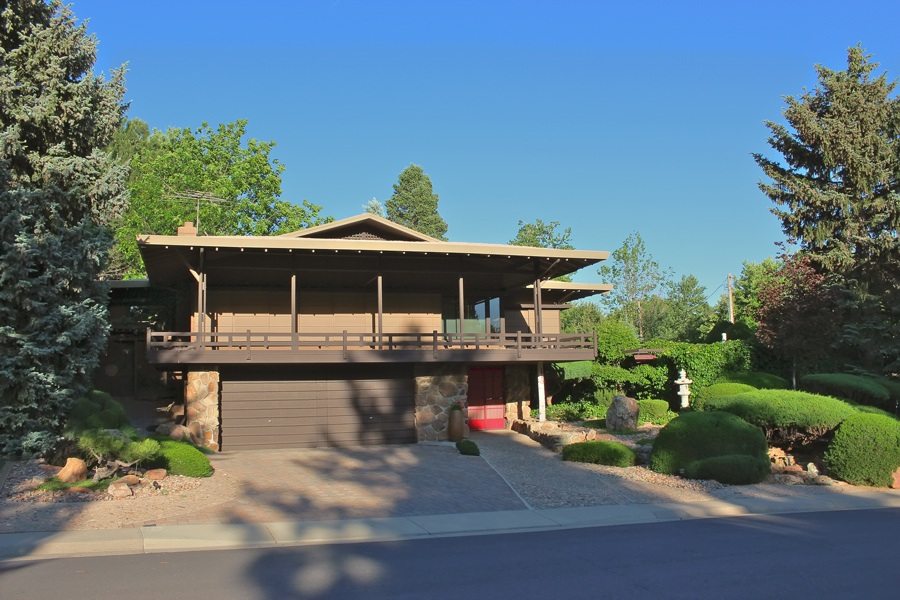
Wood modern
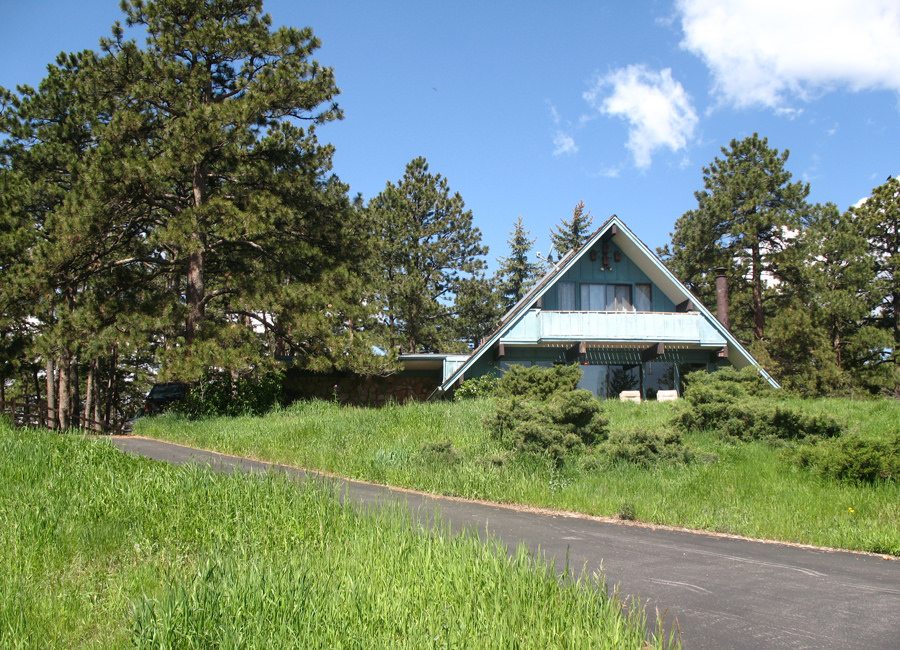
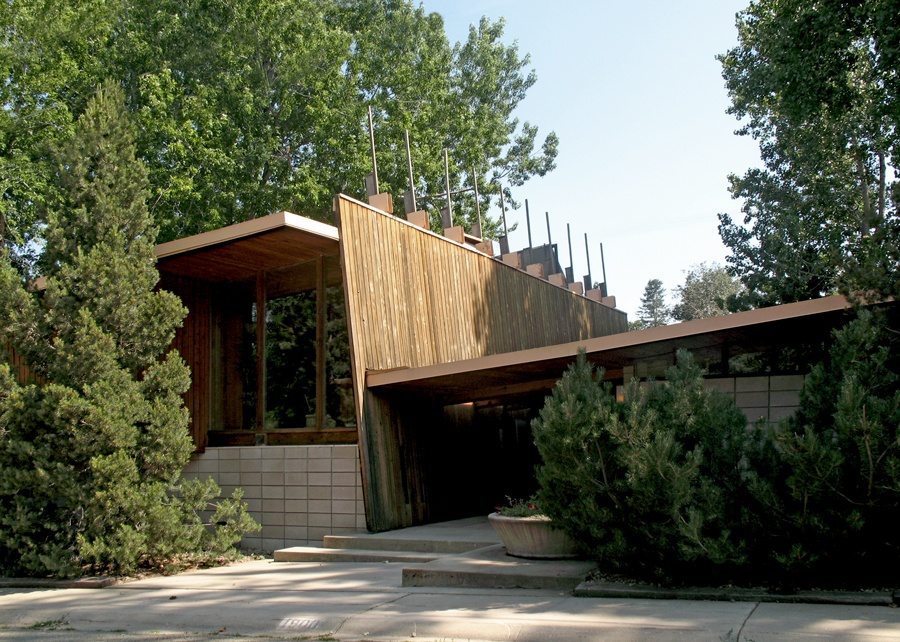
Another wooden (probably) late-1960s modern Usonian-style house in the mountains of Boulder. This time, I have no speculation on the name of the architect.
March 20th, 2012 / 1 Comment » / by Tom Lundin
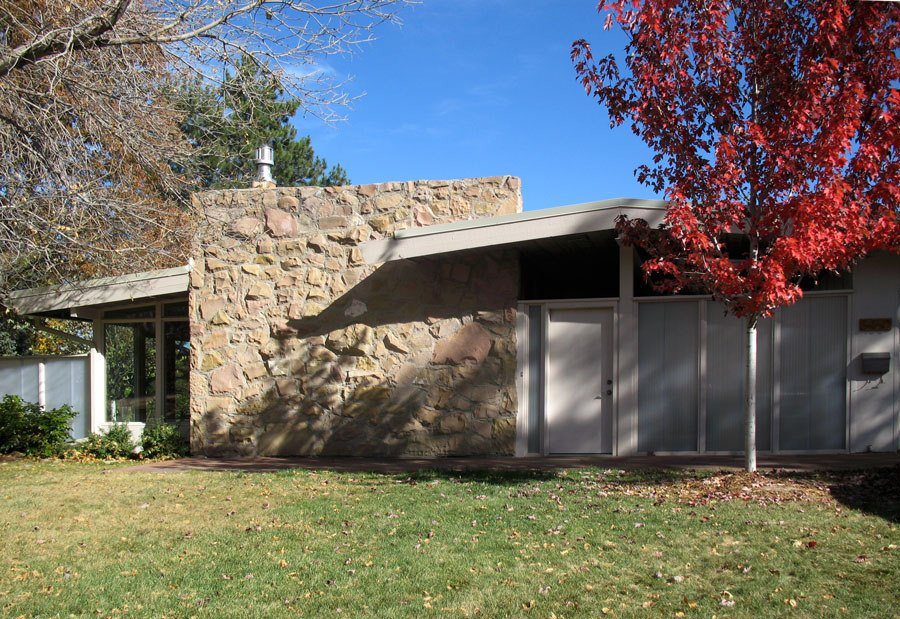
Boulder modern
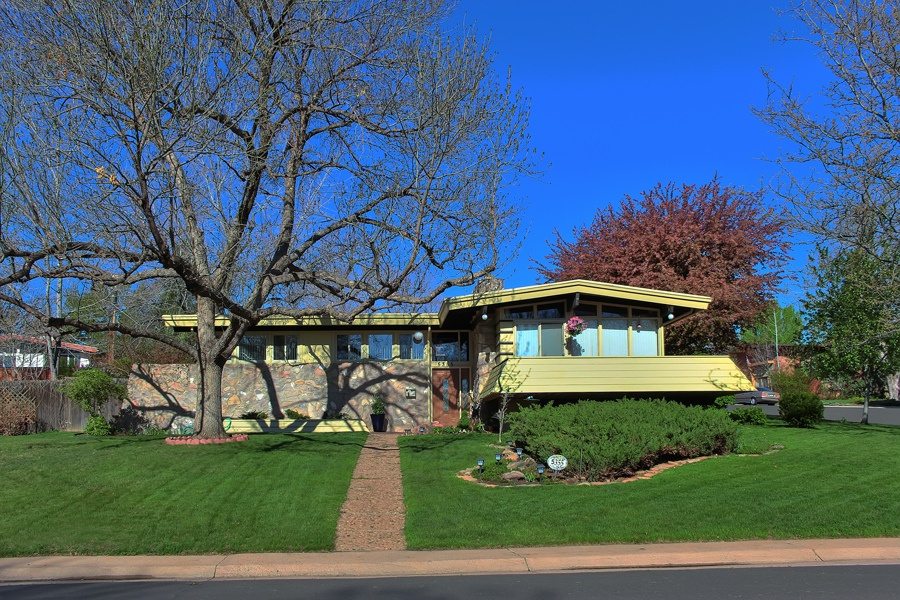
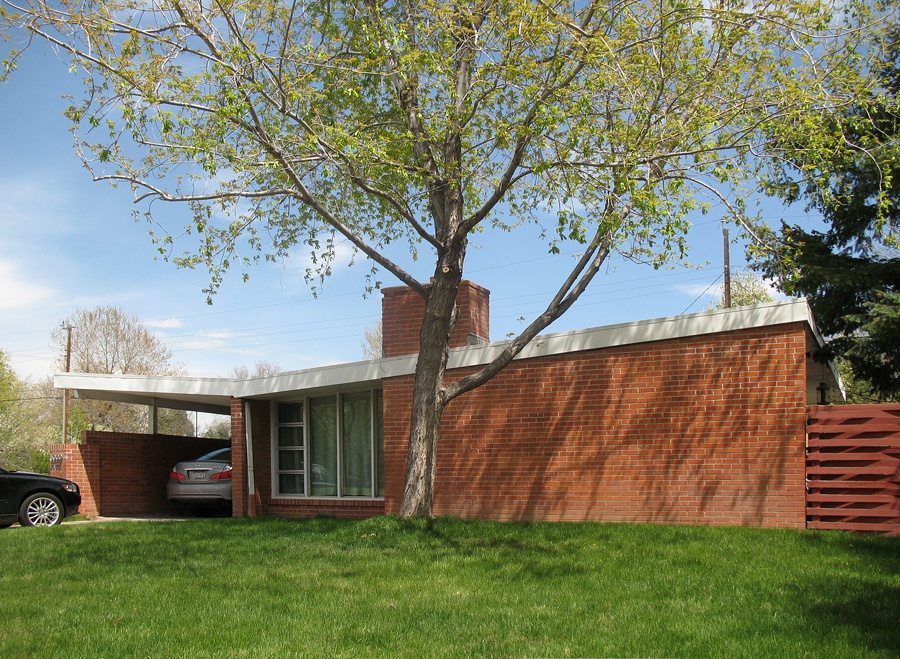
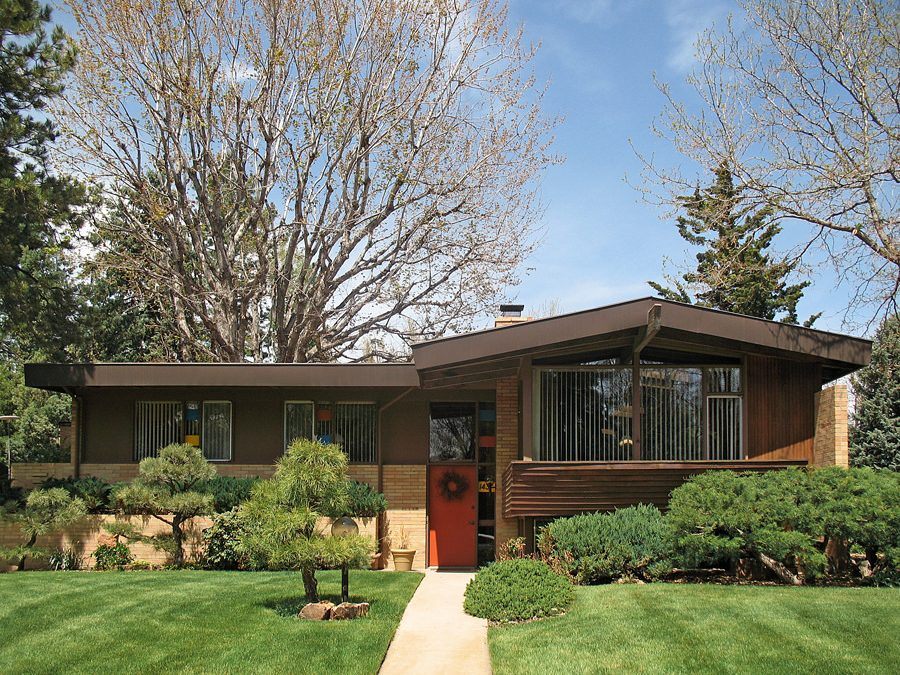
Although I do not know the facts about this house, I am fairly confident that this Usonian
home was designed by Roger Easton in the late 1960s.
March 19th, 2012 / No Comments » / by Tom Lundin
Boulder Usonia
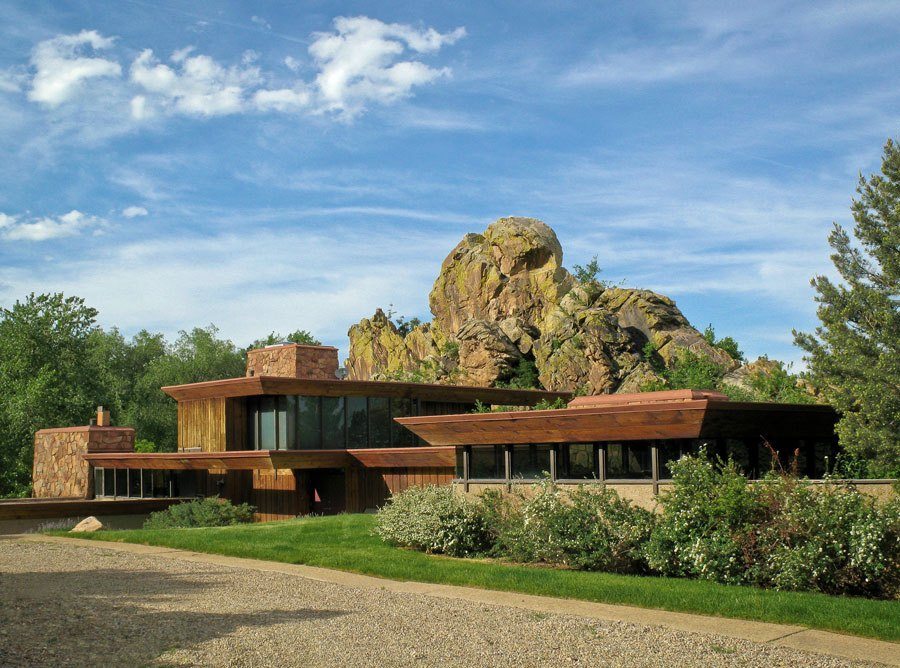
One of the best Usonian-style houses in Boulder, the Menkick House from 1970 by
Charles Haertling. Behind it is Green Rock.
November 4th, 2011 / 2 Comments » / by Tom Lundin
Addenbrooke fireplace
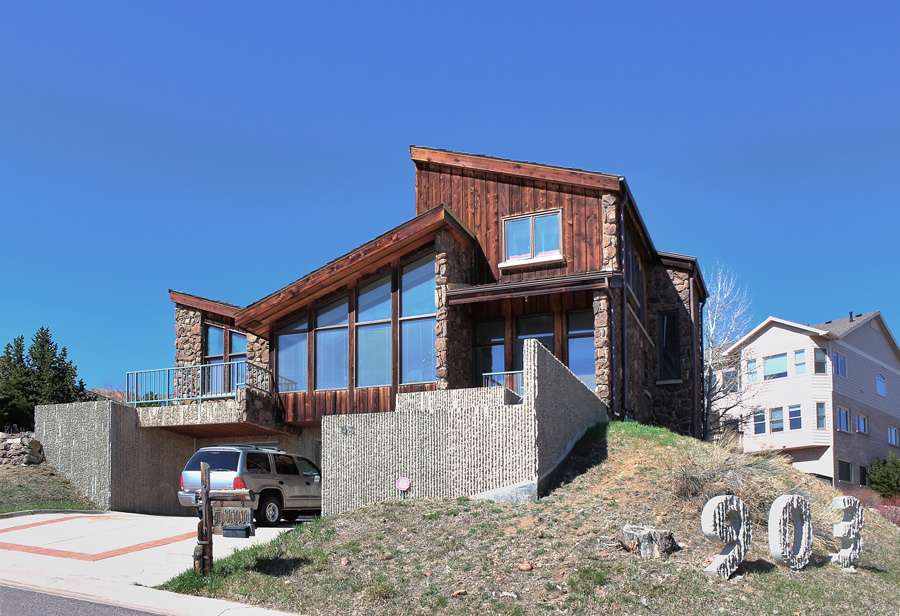
Without preservation, houses crumble and fall, leaving us little architectural history to appreciate.
While the last ranch house at Addenbrooke Brooke park was torn down in 1997, the City of Lakewood did leave this solemn fireplace, made of stones gathered from around the world and some native American artifacts discovered on the property* to remind us of the history of the site, originally homesteaded by the Everitt family in 1876.
(* you can spot a stone bowl about halfway up, two or three stones from the left)
October 28th, 2011 / No Comments » / by Tom Lundin
Joshel House Meets The Eight-Foot House
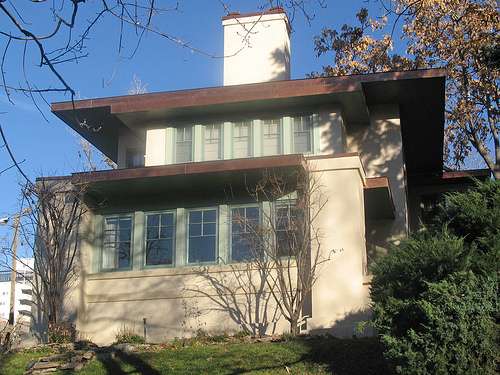
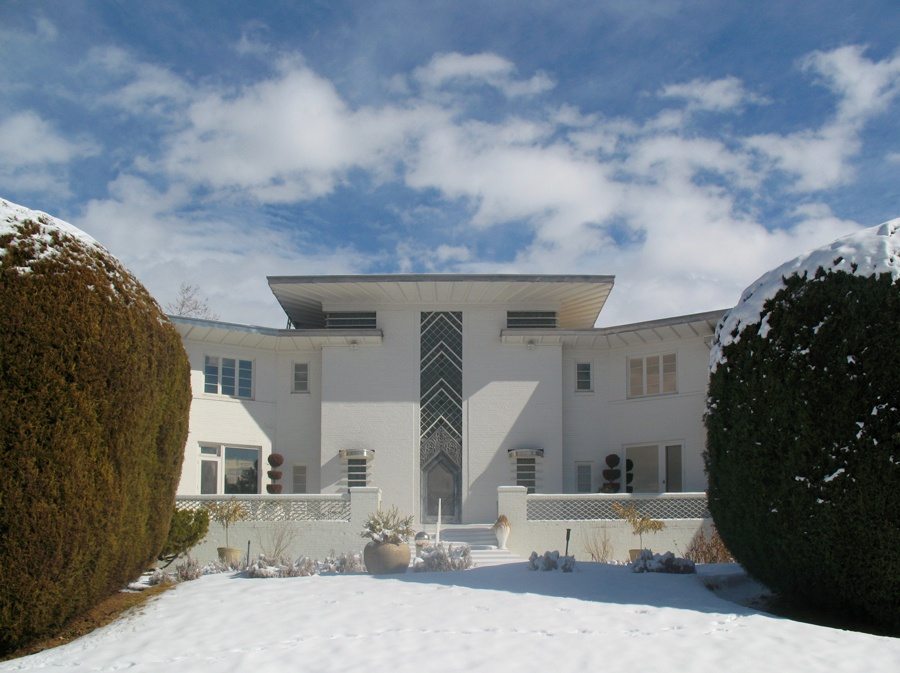
If you are driving in Denver’s Hilltop neighborhood, you might have difficulty spotting this
beautiful International-style house through the landscaping.
It is the Joshel House, designed in 1951 by local architecture/design team, Joseph and Louise Marlow, with some interior elements by Victor Hornbein. This couple designed many great mid-century International-style houses in the Denver area. (You can locate these using the Historic Denver guidebook, The Mid-Century Modern House in Denver, by Michael Paglia and Diane Wray Tomasso.)
Despite its local and national landmark status, the Joshel House was in danger of becoming a mere memory after Suzanne Joshel passed away in 2009. The estate attorney felt the property had more value as a building site and worked to undo the protective measures her own client, Suzanne Joshel, had worked so diligently to put in place. Thankfully, Historic Denver refused to vacate its preservation easements and many preservation-minded buyers expressed interest in buying the home.
My wife, Shannon Stanbro of 5280mod.com, represented one set of those buyers and spent many hours trying to educate the attorney and neighbors about the importance of preserving Hilltop’s historic modern architecture. It seems fitting that her new listing, The Eight-Foot House,
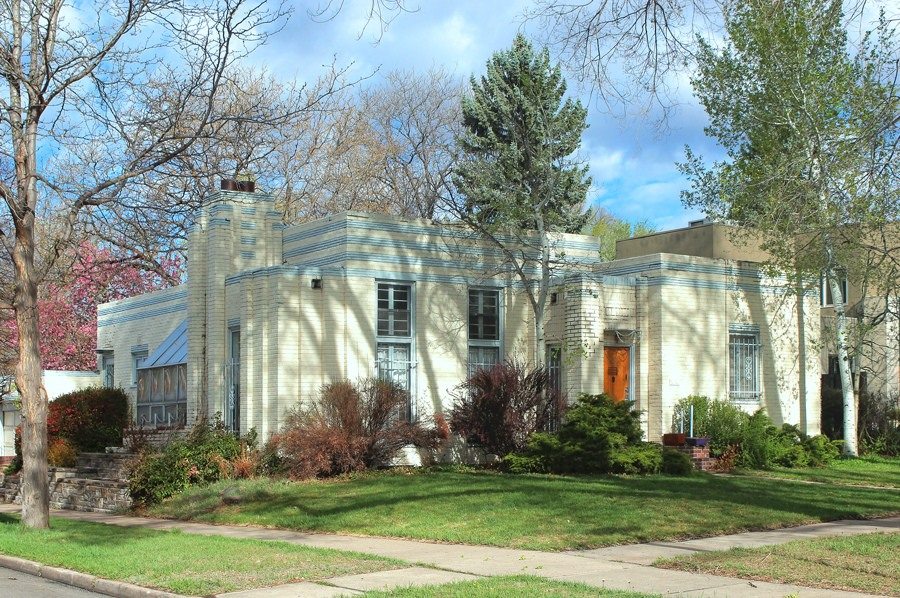
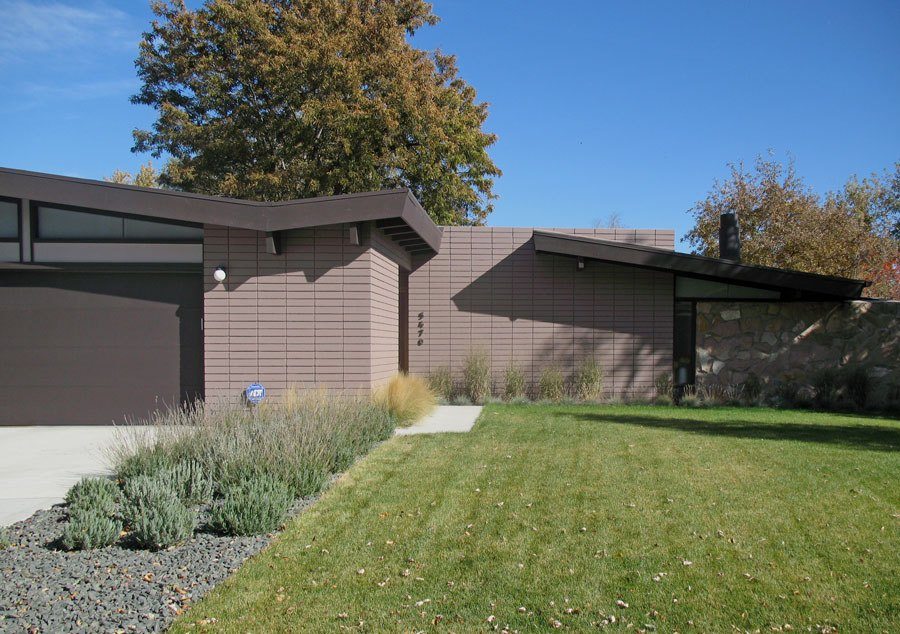
is a 2011 International-style home influenced by the Marlows’ Joshel House design.
The Eight Foot House derives its name from a passive approach to sustainable design. Created and constructed by architect Bill Buyers, a no-waste approach embraced the use of 8-foot materials, including floor to ceiling doors and windows, while paying homage to the Marlows’ elegant historic design.
I just wanted to visually compare the front of the two houses, you can find a better read and complete set of photos of the Eight-Foot House here on Shannon’s site:
www.5280mod.com. And you can see interior shots of the original Joshel House here on Lesley’s MidModRedo site.
October 18th, 2011 / 1 Comment » / by Tom Lundin