Amusement Parks...
Centennial City
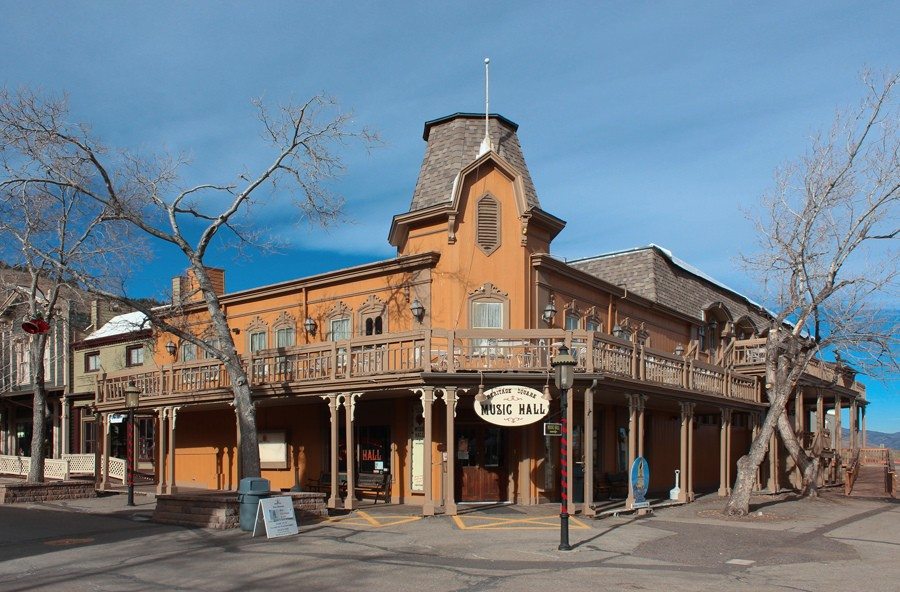
These beautiful storybook amusement park buildings were built in 1958 for W. F. Cobb for his Magic Mountain, the original themepark built at the location of what is now Heritage Square. They are a mixture of Second Empire and Gothic Revival, among other architectural styles. The town was named Centennial City as it was approximately 100 years after the construction of original cities of the area, Denver, Auroria, Arapahoe City, Golden City and Golden Gate City.
Cobb had intended to build his park on South Table Mountain not far from the former site of Arapahoe City, but the Applewood residents did not want the traffic. Instead, he built on top of the former ghost town of Apex City at the mouth of Apex Gulch. Apex City was itself built on top of ancient indian campgrounds dating back 7,000 years!
These buildings were created by Marco Engineering and use the technique of forced perspective to make the buildings look taller than they are. Marco Engineering was a company of former Hollywood art directors run by C. V. Wood. Wood had just finished building Disneyland prior to work on Magic Mountain, where he had used the same techniques in the construction of Disney’s Main Street U.S.A.
Unfortunately, W. F. Cobb ran out of money in 1960 and the original Magic Mountain park was never completed. To read the full story, check out this excellent Magic Mountain website by Richard Gardner of the Golden Landmarks Association.
Marco Engineering went on to build many projects including Lake Havasu City (where C. V. Wood brought the London Bridge!).
This includes two larger parks which are considered sister parks to Magic Mountain, Pleasure Island in Massachusetts and Freedomland in the Bronx, NY, both of which are gone today, leaving Heritage Square with it’s Centennial City as the sole survivor of the trio of parks.
November 25th, 2012 / 2 Comments » / by Tom Lundin
Satellite sign
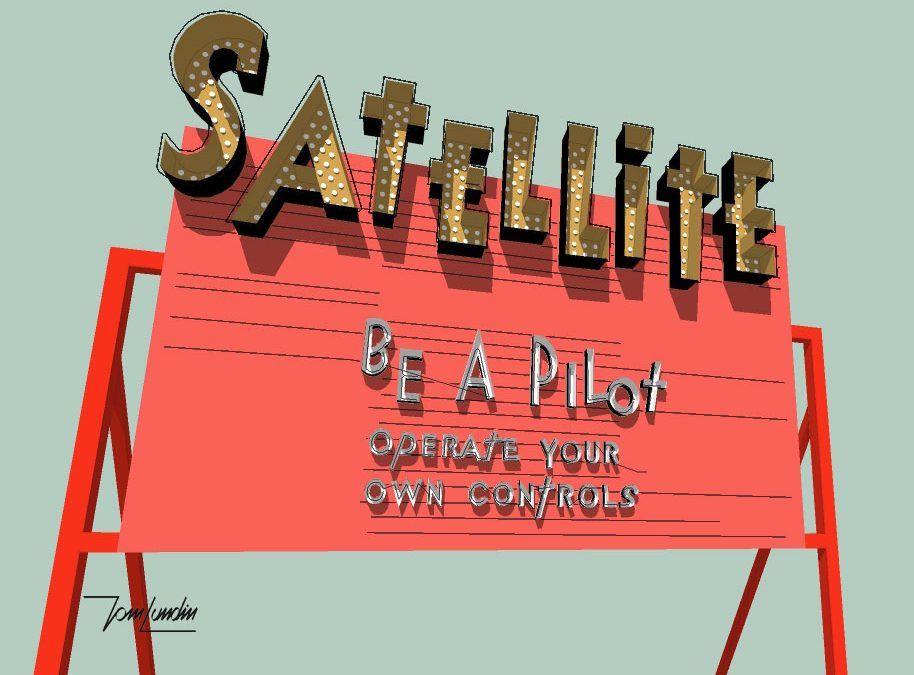
The last of this set of drawings, another SketchUp illustration, this one is the Satellite sign at Lakeside.
Now back to more photos!
June 22nd, 2012 / No Comments » / by Tom Lundin
Hurricane
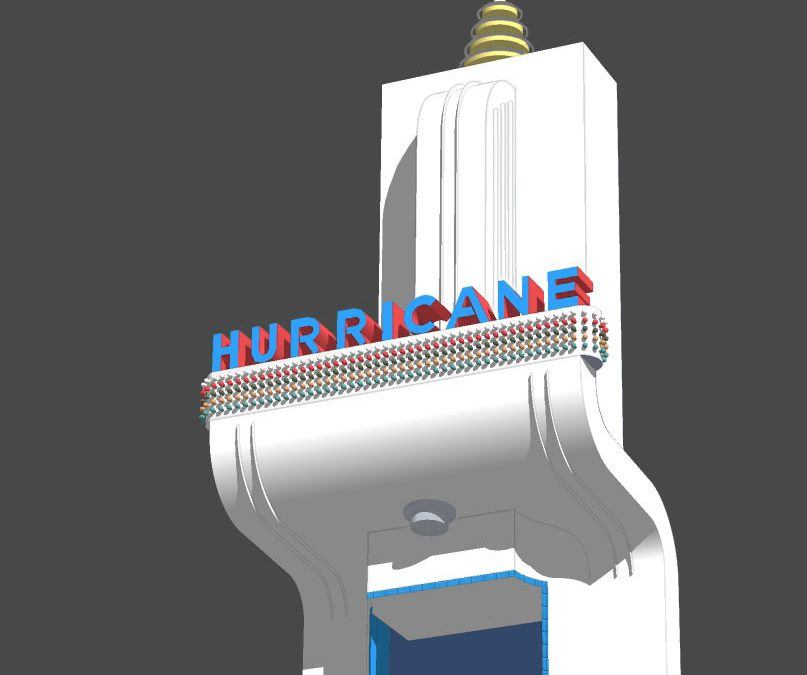
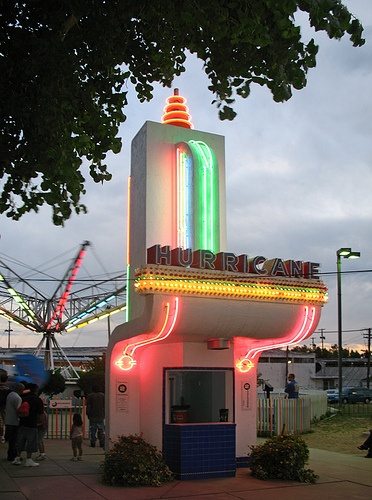
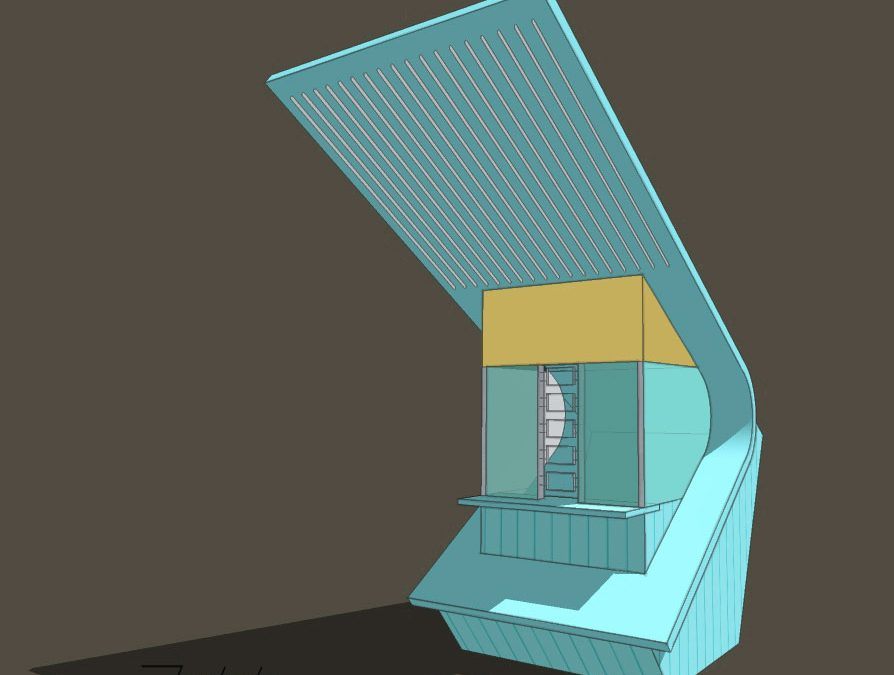
A SketchUp illustration of the art-deco Hurricane ticket booth at Lakeside Amusement Park, designed by Richard Crowther.
I’ll post one more illustration, then back to photo fun.
June 19th, 2012 / No Comments » / by Tom Lundin
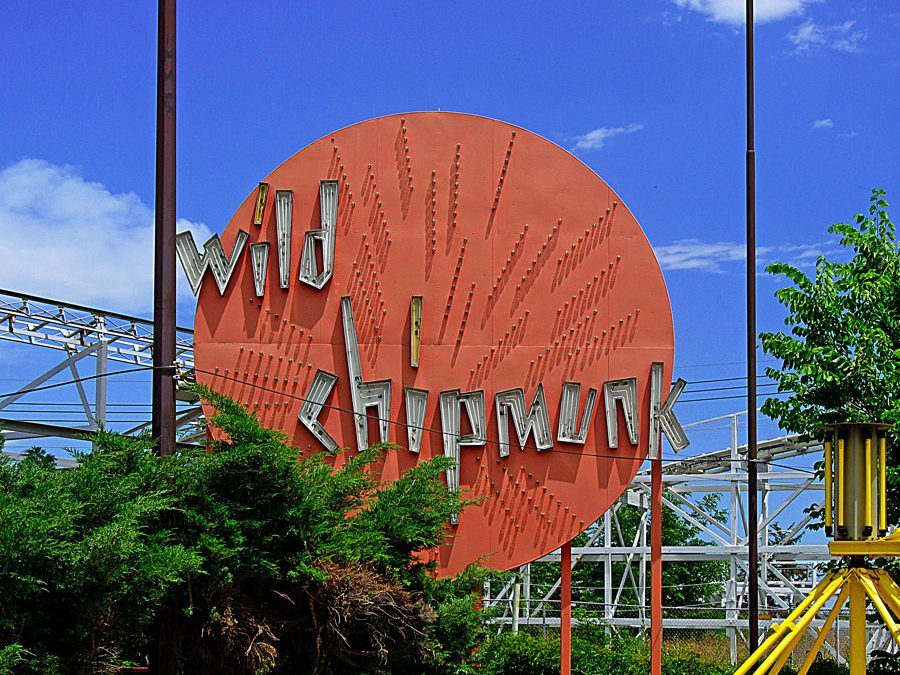
Wild Chipmunk sign
SketchUp illustration of the Wild Chipmunk sign at Lakeside.
June 15th, 2012 / No Comments » / by Tom Lundin
Lakeside Ticket Booth
A SketchUp illustration of a Lakeside ticket booth.
Hey, come join us now on Facebook: http://www.facebook.com/TheDenverEye
June 14th, 2012 / No Comments » / by Tom Lundin
500th post! Lakeside extravanganza!
This is the 500th post to The Denver Eye!
Tom Lundin here, Eyeballer #1. I first took up architectural photography in 2006 to
supply myself with source material for my technical illustration habit. Photography quickly
became an obsession.
To celebrate I am posting these Lakeside Amusement Park shots from that year, 2006. Lakeside doesn’t always allow you to photograph freely, but these were all taken before that became an issue. All I had in those days was a point-and-shoot-camera with all the distortion and poor shadows that come with a smaller digital sensor and static lens. And on that day I dealt with weather that I could not control. But the subject matter stands out no matter what the circumstance!
Lakeside Amusement Park started as a White City in 1908. White Citys sprung up in various places across the United States as imitations of the White City set up at the World’s Columbian Exposition of 1893 in Chicago. There, they built a Beaux-Arts style city with hundreds of thousands of light bulbs provided with electricity by the competing technologies of Thomas Edison (direct-current) and Nikola Tesla (alternating-current).
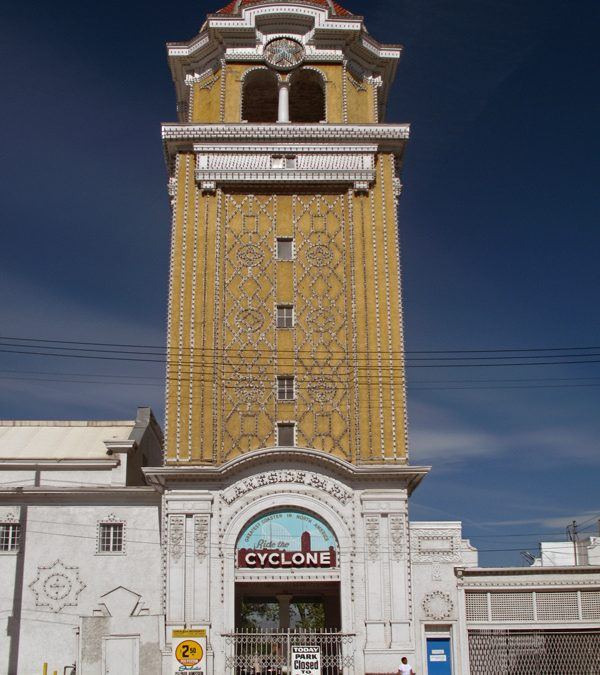
The Tower of Jewels above is decorated with 16,000 light bulbs.
Lakeside is one of the oldest remaining amusement parks in the U.S. After Benjamin Krasner bought the park in the 1930s, he gave it an incredible Art Deco makeover with the aid of architect Richard Crowther.
When Richard Crowther moved to Denver, he was an expert at neon lighting as he had just lit up the San Francisco Golden Gate International Exposition Fair of 1940. Crowther became a famous Denver modernist architect, designing the Neufeld House in 1956. He designed multiple Cinerama theaters including Denver’s Cooper Theater on Colorado Blvd (now gone), and achieved his greatest fame as a pioneering green architect in Cherry Creek, noted for his use of Passive Solar Heating.
The Cooper Cinerama Theatre, from 1961.
Lakeside is filled withoutstanding examples of Art Moderne or Streamline Modern signs, ticket booths, gardens and other features. The parts of the park that are not Art Deco are from the original White City and are often reused elsewhere in the park.
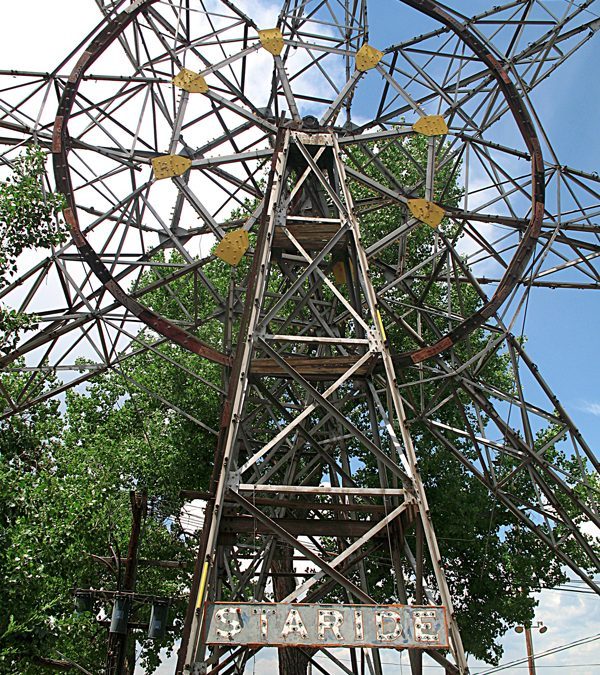
The Starride ferris wheel from the earlier days of the park.
A minature diesel version of the Zephyr!
When this tower was built in 1908, it was the tallest structure in the state!
Looking out over Lake Rhoda.
Lakeside Speedway closed in 1988 after 50 years of racing!
Lakeside’s famous Merry-Go-Round. Four rows filled with the widest variety of animals you will ever see on any merry-go-round.
White City’s Casino Theatre
This steam-powered minature locomotive has been running here continously since the opening of the park in 1908!
6
June 5th, 2012 / 7 Comments » / by Tom Lundin
The Whip
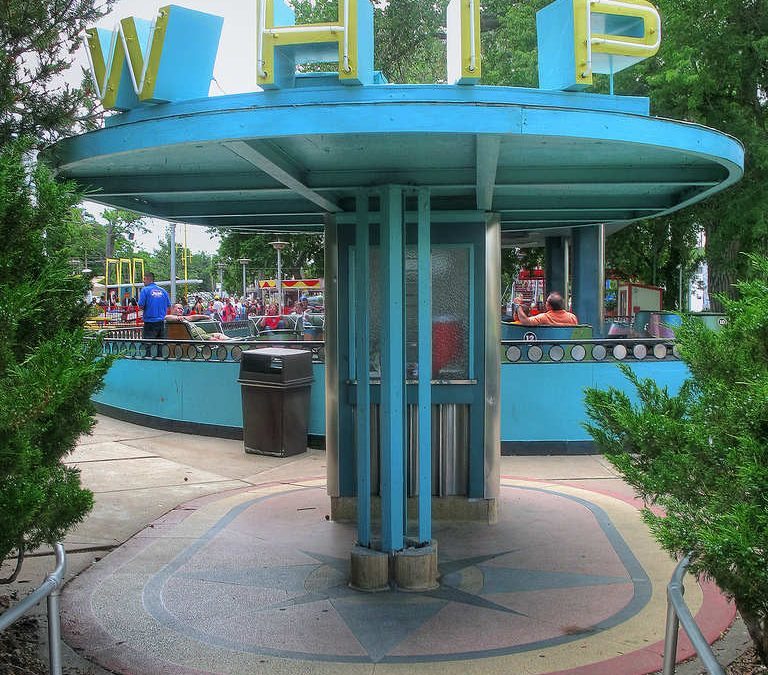
A Lakeside Amusement Park Art Deco ticket booth for The Whip
ride, designed in the ’40s or ’50s by Richard Crowther.
July 12th, 2011 / No Comments » / by Tom Lundin
Scrambler
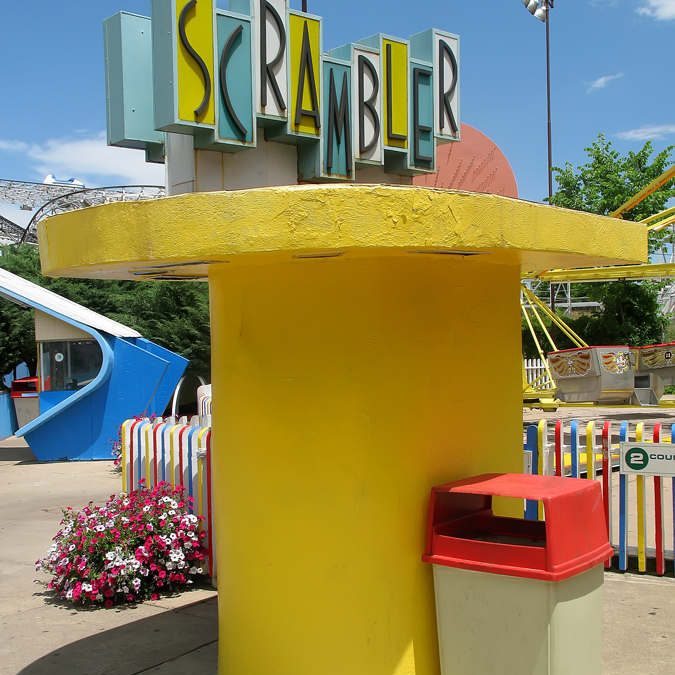
The Scrambler ticket booth from Lakeside Amusement Park, designed by
Richard Crowther in the ’50s or early 1960s, I believe.
April 29th, 2011 / 1 Comment » / by Tom Lundin
Staride
The large Staride Ferris Wheel at Lakeside Amusement Park. The ride
probably dates to when the park originally opened as White City in 1908.
September 21st, 2010 / No Comments » / by Tom Lundin