Phil Urso home movies

Denver jazz great, the late Phil Urso, hamming it up with fellow members
of the Elliot Lawrence Band in this rare 1950 8mm home movie.

This happy, short clip features Howie Mann, Joe Techner and Phil Urso
in suspenders.

Phil Urso had a great tone, somewhere between Lester Young and Sonny
Rollins
. He played with many jazz legends but is best known for his mid-’50s
sides with Chet Baker.

Here is a much longer clip of the Elliot Lawrence Band from 1949, touring
around Golden, Lookout Mountain, Mt. Evans (Urso showing up at the top of
the mountain around 5:50 & 6:15), then off to Utah where Phil Urso and Jimmy
Padget
look parched (at 7:50). Phil shows up one more time at about 9:15!

One last clip, the first solo on this wonderful Elliot Lawrence recording
Elevation is Phil Urso on tenor. Dig that tone!!

January 26th, 2012 / No Comments » / by Tom Lundin

Driftwood Hotel sign

Driftwood_IMG_3638

The Driftwood Hotel sign on E. Colfax. It points to the hotel on the other side of the street!

Colfax_Driftwood_IMG_1863

The driftwood from the Driftwood Hotel.

January 25th, 2012 / No Comments » / by Tom Lundin

The Grim Reapers

(Ronnie Montrose: top, unknown: bottom left, Rick Palan: middle, Ron Akers: right)

Ronnie Montrose, circa 1966, in Denver band The Grim Reapers (or sometimes called
The Grim Reapers of the New World).

Ronnie wasn’t born in Denver, but moved here when he was two. He got his first guitar in 1964 and formed the Grim Reapers a year or so later. After the Reapers, Ronnie moved to San Francisco and formed the band Sawbuck, landed the guitar spot on Van Morrison’s Tupelo Honey, joined the Edgar Winter Band, then formed his most famous group Montrose with singer Sammy Hagar.

(photo borrowed from Grand Junction Free Press)

January 5th, 2012 / No Comments » / by Tom Lundin

Downtown

IMG_1794

… somewhere behind the Bar-Bar

January 4th, 2012 / No Comments » / by Tom Lundin

Tags:

West Colfax

IMG_2231

January 2nd, 2012 / No Comments » / by Tom Lundin

Happy New Year from the Front Range

IMG_2226z

I have been taking a little break over the holidays, but here is a photo looking out over
Golden, Jan 1st 2012!

January 2nd, 2012 / No Comments » / by Tom Lundin

Seasons Greetings from Zeckendorf Plaza


Photos © 2011 Alan Golin Gass, FAIA

A seasonal late-60s-era holiday shot of Zeckendorf Plaza, with lights displayed under the hyperbolic-paraboloid roof and out in the plaza over the ice skating rink.

A famous “lost” I. M. Pei & Associates design, the plaza was built in 1959 and sadly torn
down in 1996.

December 23rd, 2011 / No Comments » / by Alan G. Gass

Colfax, then and now

387325_1968404269760_1832565966_1261426_3567435_n

This photo of Colfax Avenue above was taken in 1972 for the Documerica project funded by the EPA to document environmental impact.

I had expressed disbelief that this was a real, undoctored photo, as I did not think the mountains could be photographed towering over Colfax like that.

391016_2583068649770_1046095221_32787774_538362456_n

Well, ace photographer Dan Disner proved me wrong by meticulously finding the exact spot to recreate this photo today. He really nailed it too, didn’t he?

Compare the Big-T Thriftway sign with the current Family Dollar sign, the Capitol building, the church steeple, the outline of the mountains and the Mountain State Bank sign, visible faintly through the trees in the contemporary photo.

Dan has a nice website where he displays some beautiful shots of the wildlife out on his farm in Adam’s County: http://www.your20.com/

December 19th, 2011 / 2 Comments » / by Tom Lundin

Bettie Page

Bettie

One more old Denver ’50s burlesque ad…. and just because it will be the only time I get to post something Bettie Page-related on The Eye.

Unless you’ve been under a rock for the last 25 years, you will recognize the famous risque model Bettie Page. But what a disappointment it must of have been for the traveling businessman to visit Denver, see this ad and head over the Chez Paree and find out that Bettie Page doesn’t dance there and never danced there.

Bettie Page was a photography model, not a traveling dancer likes the ladies in yesterday’s ad. The Chez Paree must have ‘borrowed’ one of the (now) famous Bunny Yeager jungle photos of Bettie for this advert. And this is 1958, one year before she retired from the business.

I believe the Chez Paree location is still there, I think it is the building on the corner of Court Place and Broadway, to the right of the old Duffy’s Shamrock, near the Brown Palace!

(sorry if this offends, back to historical architecture tomorrow!)

December 13th, 2011 / 2 Comments » / by Tom Lundin

All star burlesque lineup

Tropics

Since I have my drawing up of The Tropics, I thought I would post another ad, this time with an all-star name-dropping of famous burlesque dancers, Tempest Storm, Blaze Starr and Lily St. Cyr. These were all big names in 1962 when this ad came out and today are all easily “Google-able”.

The Girl In the Gilded Cage was none other than club owner Warren St. Thomas‘ own wife, dancer Tiger Lily!

It’s astonishing to me that ads like this were commonplace in the Rocky Mountain News and Denver Post back then, but this ad actually comes from an issue of the Hotel Greeters Guide and Denver Daily Doings weekly magazine.

(Hope this does not offend, I am posting another one tomorrow!)

December 12th, 2011 / No Comments » / by Tom Lundin

Troutdale

Troutdale

Troutdale In The Pines ad from 1958.

Troutdale was a three story hotel, built in 1920 with 6,000 wagonloads of local rock. A 4th story was added in 1927. The hotel had a large lounge, a dining room that seated 250 and a dancing pavilion called the Rainbow Ballroom (which you can see in the ad hanging over the lake.)

The first floor had private dining rooms, a billiard room, a bar, a barber shop, a drug store, kitchens and a bakery, guest rooms were on the 2nd, 3rd & 4th floors.

Troutdale2

I am guessing, but I would assume the architect was J. B. Benedict, who designed many similar stone based buildings in the Front Range.

Famous guests included Teddy Roosevelt, Greta Garbo, Douglas Fairbanks Sr., Mary Pickford and the Marx Brothers!

December 11th, 2011 / No Comments » / by Tom Lundin

Valverde Yacht Club sign

ValverdeYachtClub_IMG_2444

Nice, simple, Googie sign for the Valverde Yacht Club, now gone,
of course. Jokingly named after the 1965 Platte River Flood decimated
the area.

December 9th, 2011 / No Comments » / by Tom Lundin

Safari Supper Club

IMG_2097z

The soon-to-be-opened Mauki Tiki Bar on S. Broadway reminds me to post some photos
of the Safari Supper Club, an exotic ’60s-era night club in Ft. Collins, owned and run by
Bob Swerer, also the leader of the house band.

IMG_2098z

I just determined that building that housed this night club still survives, I will post a photo
when the weather cooperates.

IMG_2099z

December 4th, 2011 / No Comments » / by Tom Lundin

Tropics ad

Tropics

An ad for Warren St. Thomas’ famous Denver night club, The Tropics. Most of the
building is still there on Morrison Road.

This ad is from a 1959 issue of the Hotel Greeter’s Guide and Denver Daily Doings.
The And Everything Else Too website posted a bunch of ads from a 1962 issue just
today: andeverythingelsetoo.

December 2nd, 2011 / No Comments » / by Tom Lundin

Horace Mann Middle School

IMG_2048z

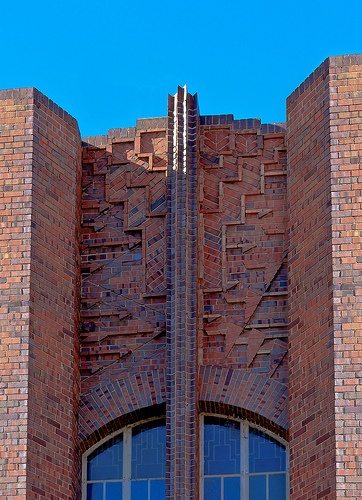
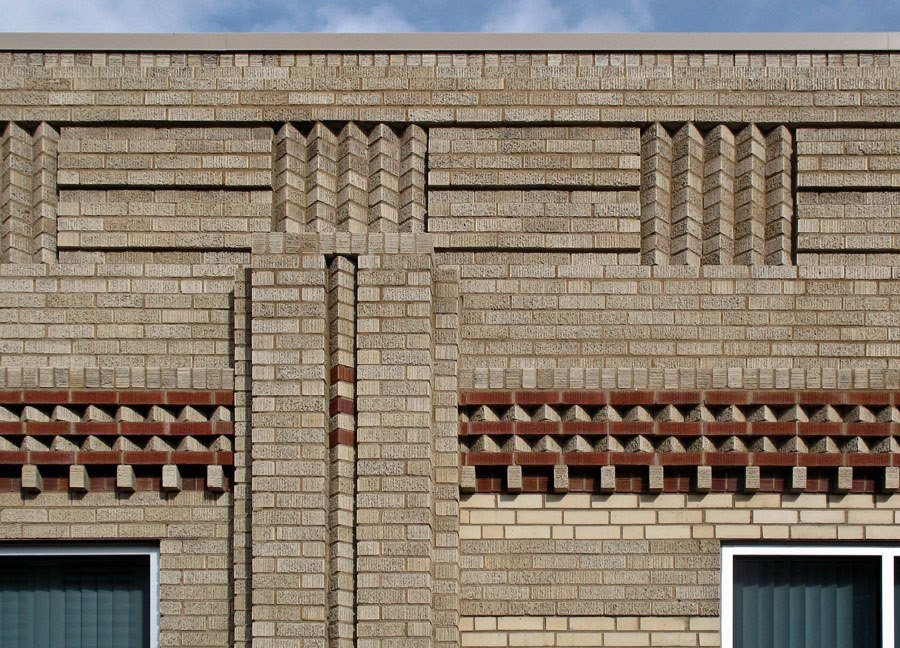
Horace Mann Middle School, a Temple Buell Art Deco brick masterpiece designed in 1931.

IMG_2069z

Named after the famous education reformer from Massachusetts,
the floor plan view is a giant “H”.

IMG_2043z

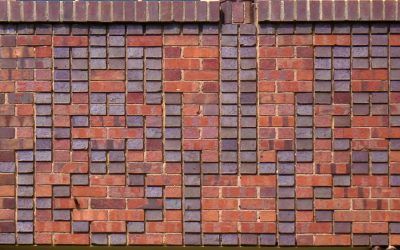
And because the floor plan is clearly an “H”, I would suggest that the elevations also
represent abstracted “H”’s, as well.

IMG_2067z

Temple Buell is the master Denver architect repsonsible for the location of the Cherry Creek Shopping Center. In the 1930s, he designed Art Deco treasures, thankfully some still survive today. Other examples are the brick Mullen’s Home For Nurses and the terra cotta Paramount Theatre.

IMG_2058z

I cannot imagine how the designs created from the stacked brick could be planned out on a sheet of drafting paper or how bricklayers could even implement these plans.

IMG_2044z

(as always, click photos to enlarge)

December 2nd, 2011 / No Comments » / by Tom Lundin

Bryant-Webster Elementary

IMG_2018zz

Bryant-Webster Elementary, an Art Deco design from
1932 by G. Meredith Musick and J. Roger Musick.

IMG_2034z

Doorway of the main entrance.

IMG_2039z

Buffalo and mountain abstracts.

IMG_2032z

I have a difficult time fathoming how someone can plan
such elaborate, decorative “3D” brickwork.

IMG_2021zz

Secondary entrance.

IMG_2022z

Arrows and birds abstract.

November 28th, 2011 / 2 Comments » / by Tom Lundin

Mile High Center


Photos © 2011 Alan Golin Gass, FAIA

Today we have guest photographer Alan G. Gass (esteemed architect, historian and in my view, city hero) with some 1950s-era shots of I. M. Pei & Associates’ Mile High Center.

If you look closely at this first shot of the entranceway canopy on Broadway, you can see Mr. Gass himself in the reflection of the front door, taking this photo.

Many of the features shown in the photos, of this early important work of I. M. Pei, no longer exist, as many of the spaces were absorbed into the design of One United Bank Center (now Wells Fargo Center, the “Cash Register Building”).

In this shot you can see the canopy as it crosses through the fountains to connect to the restaurant and shops of the Transportation Building. Behind the plaza you can view some of the details of the remodeled bank building, which is the third building of Mile High Center design.

Viewing east toward the fountains, past the row of lights on the bank, this photo nicely depicts the interrelationship of all three buildings with the plaza.

And lastly, a shot of the concrete barrel-shaped roof of the Transportation Building. You can also see additional details of the bank building. This is the intersection of 17th and Lincoln, compare how different this looks today.

November 22nd, 2011 / 2 Comments » / by Alan G. Gass

Broadway & 17th

IMG_5996z

Broadway and 17th in downtown Denver, showing the contrasts of styles from different eras.
The sandstone Brown Palace from 1892, the International-style Mile High Tower from 1956,
and peeking over the top, the post-modern Wells Fargo Center skyscraper from 1984.

November 21st, 2011 / No Comments » / by Tom Lundin

Great day for Denver!

Scan10217

November 18th, 2011 / No Comments » / by Tom Lundin

Buerger Bros

IMG_1890z

The Buerger Brothers Beauty Supply building in downtown Denver, an Art Deco design
from 1929 by Montana Fallis. Fallis’ firm also designed the Art Deco Mayan Theater.

IMG_1874z

Terra cotta design from Buerger Brothers Beauty Supply.

The Historic Denver Guidebook, Denver: The Modern City (by Michael Paglia, Rodd Wheaton and Diane Wray Tomasso) suggests that Fallis’ son Myrlin Fallis might have been that actual designer of The Mayan and Buerger Bros.

IMG_1899z

In 1937 Buerger Brothers expanded into the Denver Fire Clay Building next door with a
white tile Art Deco makeover to create the Buerger Building Annex sister building.

November 16th, 2011 / 1 Comment » / by Tom Lundin

Paramount Theatre

IMG_1750z

Downtown Denver’s only surviving original movie house, the Art Deco Paramount Theater. Designed 1929 by Temple Buell.

IMG_1771z

Other surviving Temple Buell Art Deco designs are the Horace Mann Middle School and Mullen’s Home for Nurses.

IMG_1759z

Temple Buell was one of Denver’s more successful architects. He purchased land and eventually used it as the location of the original Cherry Creek Shopping Center.

November 13th, 2011 / No Comments » / by Tom Lundin

Rockmount Ranch Wear

IMG_1840Z

Aside from the Sugar Building Annex below, the other example of Prarie-style in downtown Denver is the Rockmount Ranchwear Building, designed 1909 by the Fisher brothers before they changed the name of their firm to Fisher & Fisher.

Rockmount Ranch Wear, the world-famous western clothes manufacturer, took over the building in 1946. They have sold their trademark shirts with the sawtooth pockets and diamond-shaped snaps to Elvis Presley, Bob Dylan, Paul McCartney, Ronald Reagan, Bruce Springsteen, Don Henley, Toby Keith and of course, many others.

IMG_1837Z

Here is a closeup of the Prairie-style decoration that is a simplified version of the work of Louis Sullivan and Frank Lloyd Wright.

November 11th, 2011 / No Comments » / by Tom Lundin

Fyodor, Boyd and Ralph

Photo © 2011 Gregory Ego

Guest photographer Gregory Ego weighs in on The Eye with a photo of three unusual underground music artists from present day Denver: Little Fyodor, Boyd Rice and Ralph Gean, taken recently at the Lion’s Lair on Colfax.

The 2011 Boyd Rice biography film, Iconoclast (directed by Larry Wessel), is being shown in it’s entirety at the Denver Underground Film Festival this Sunday, November 13th at the Unitarian Society of Denver (1400 Lafayette).

(Be sure to view Gregory Egos photo website (http://gregoryegophotos.blogspot.com/), a who’s who of underground music, literary and political figures.

November 8th, 2011 / No Comments » / by Gregory Ego

Sugar Building and Annex

IMG_1848z

The Sugar Building is a grand Denver example of a Sullivanesque Chicago-style commercial building. The style’s name comes from the father of modern architecture, Louis Sullivan and the commercial style that came about from the reconstruction of Chicago following the fire of 1871.

IMG_1803z

Designed 1906 by Aaron Gove and Thomas Walsh. Walsh had worked in Chicago and Gove had studied near there.

The terra cotta and brick geometrical ornaments shown above on the upper two floors are one of the most notable Sullivanesque features. Ornament was far less prominent in the styles that followed, like the Prairie style.

IMG_1814z

The Sugar Building Annex was also designed by Gove and Walsh, this time in this newer Prairie style in 1912. It is a style heavily associated with Frank Lloyd Wright and house design.

Surviving examples of Prarie style are uncommon in Denver, but the use of this style in commercial buildings is very rare.

IMG_1808z

One last shot of the Sullivanesque Sugar Building ornament.

As for Prairie style, this became the precursor to Frank Lloyd Wright’s Usonian style.

(Though these days the Prairie-style appellation is often loosely applied to new homes. It seems like any new construction with a gable roof and deep eaves reminds the owner of Wright’s Robie House and gives them the license to invoke this important historical style. ;<)

November 8th, 2011 / No Comments » / by Tom Lundin

Republic Plaza

IMG_1746z

The Republic Plaza, designed 1983 by Donald Smith for
Skidmore, Owings & Merrill. The late-modern design now
stands out from decorative, contemporary styles.

Before the Republic Plaza, the Republic Building stood on
this site, designed in 1928 by G. Merideth Musick.

November 5th, 2011 / No Comments » / by Tom Lundin